Glowing from Within: How Daily Hydration with Coconut Water Transforms Your Skin
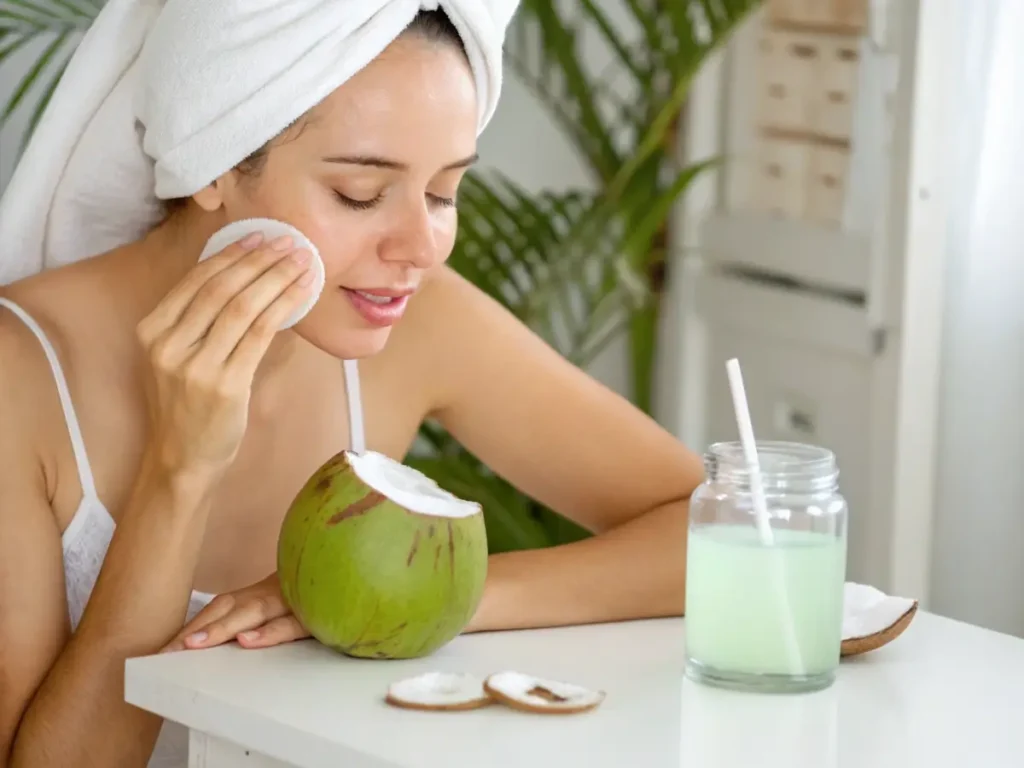
The mirror, that unforgiving truth-teller, often reflects back not just our physical appearance, but the silent narratives of our daily lives. For years, I, much like countless others, waged a relentless battle against a complexion that seemed perpetually weary, dull, and prone to the occasional breakout. I invested in an arsenal of serums, creams, and masks, each promising the elusive "glow," yet the true radiance remained just out of reach. My skin, despite my best external efforts, felt thirsty, lackluster, and stubbornly resistant to the vibrant health I craved. It was a common story, one of external remedies for an internal dilemma, a desperate search for a surface solution when the roots of the problem lay far deeper.
This pursuit of perfect skin is a journey many undertake, often leading us down paths paved with expensive promises and fleeting results. We are taught to cleanse, tone, and moisturize, to exfoliate and protect, to layer and treat. And while these external rituals are undeniably important, they often overshadow a fundamental truth: the skin, our body’s largest organ, is a direct reflection of our internal environment. It whispers secrets about our diet, our stress levels, our sleep patterns, and, perhaps most critically, our hydration status. The concept of "glowing from within" isn’t merely a poetic phrase; it is a profound physiological reality, one that begins with the very essence of life itself: water.
But not all hydration is created equal. For a long time, the advice was simple: drink more water. Gallons of plain H2O, gulped down with diligent resolve. Yet, for many, myself included, this didn’t quite unlock the radiant potential we sought. My skin, while perhaps less parched, still lacked that vibrant luminosity, that undeniable vitality that screams health. It was a puzzle, one that led me, and an increasingly knowledgeable audience, to question the very nature of hydration and to explore what else the natural world might offer. This is where the humble coconut, and its miraculous liquid, enters the story, not as a fleeting trend, but as a potent, scientifically-backed elixir capable of fundamentally transforming your skin from the inside out.
The Skin’s Silent Plea: Understanding Dehydration’s Insidious Impact
Before we delve into the magic of coconut water, it’s crucial to truly understand the profound and often underestimated impact of dehydration on our skin. Our skin is a complex, multi-layered organ, a sophisticated barrier designed to protect us from the external world. It comprises the epidermis (the outermost protective layer), the dermis (housing collagen, elastin, and blood vessels), and the hypodermis (fat and connective tissue). Water plays a critical role in every single one of these layers, influencing everything from cell function to structural integrity.
When our bodies, and consequently our skin cells, are inadequately hydrated, the consequences are far more extensive than just feeling "dry." Dehydration manifests in a myriad of subtle yet significant ways, often masquerading as other skin concerns:
- Dullness and Lack of Radiance: Properly hydrated skin cells are plump and reflect light more evenly, contributing to a natural luminosity. When dehydrated, cells shrivel, creating an uneven surface that scatters light, resulting in a dull, ashy, or lifeless complexion. The metabolic processes within these cells also slow down, further diminishing their vitality.
- Increased Appearance of Fine Lines and Wrinkles: Dehydrated skin loses its plumpness, making existing fine lines and wrinkles appear more pronounced. The skin’s natural elasticity, supported by water-rich collagen and elastin fibers, diminishes, leading to a loss of firmness and resilience.
- Compromised Barrier Function: The stratum corneum, the outermost layer of the epidermis, relies on adequate water content to maintain its integrity. When dehydrated, this barrier becomes compromised, leading to increased Trans-Epidermal Water Loss (TEWL). This makes the skin more vulnerable to environmental aggressors, irritants, and allergens, leading to sensitivity, redness, and inflammation.
- Uneven Skin Tone and Texture: Dehydration can impair the skin’s natural exfoliation process, leading to a buildup of dead skin cells on the surface. This contributes to a rough texture and an uneven skin tone. Furthermore, nutrient delivery to skin cells is hindered, impacting cellular regeneration and repair.
- Increased Sensitivity and Redness: A weakened skin barrier, a direct consequence of dehydration, makes the skin more reactive. It becomes more susceptible to irritation from skincare products, environmental pollutants, and temperature changes, often manifesting as persistent redness or a feeling of tightness.
- Even Breakouts: Paradoxically, dehydrated skin can sometimes lead to breakouts. When the skin’s barrier is compromised, it may overcompensate by producing more oil to try and protect itself. This excess sebum, combined with dead skin cell buildup, creates a perfect breeding ground for acne-causing bacteria.
The common refrain of "just drink more water" often falls short because the human body isn’t a simple conduit for water. Our cells need more than just plain H2O to effectively absorb and retain fluid. This is where the concept of electrolyte balance becomes critical. Electrolytes—minerals like potassium, sodium, magnesium, and calcium—are essential for maintaining fluid balance, nerve impulses, and muscle function. Without them, water can pass through our system without truly hydrating our cells at a deeper, more sustainable level. This is the fundamental difference that elevates coconut water from a mere beverage to a profound skin transformer.
Beyond H2O: The Coconut Water Difference
Imagine a natural elixir, encased in a hard, protective shell, brimming with life-giving nutrients, perfected by nature itself. This is young green coconut water. For centuries, tropical cultures have revered it, not just as a refreshing drink, but as a source of health and vitality. Its rise in global popularity isn’t merely a trend; it’s a testament to its unique biochemical profile, which offers a superior form of hydration that plain water simply cannot match, especially when it comes to skin health.
What makes coconut water so extraordinarily effective? It’s a symphony of nature’s best ingredients, each playing a vital role in cellular hydration and skin rejuvenation:
-
The Powerhouse of Electrolytes: This is arguably coconut water’s most celebrated feature. It is naturally rich in essential electrolytes, particularly potassium (often more than a banana!), sodium, magnesium, calcium, and phosphorus. These aren’t just buzzwords; they are the gatekeepers of cellular hydration.
- Potassium: Crucial for maintaining fluid balance within cells, counteracting the effects of sodium, and supporting nerve and muscle function. It helps pull water into the cells, ensuring deep hydration.
- Sodium: While often vilified, sodium is vital for fluid balance outside the cells and for nerve function. In coconut water, it’s present in balanced amounts, working synergistically with potassium.
- Magnesium: Essential for over 300 enzymatic reactions in the body, including those involved in protein synthesis (collagen, anyone?) and DNA repair. It also helps regulate fluid balance and reduce inflammation.
- Calcium & Phosphorus: Important for bone health, but also play roles in cell signaling and overall cellular function, indirectly supporting skin vitality.
The balanced electrolyte profile of coconut water mimics the body’s natural fluid composition, making it incredibly bioavailable. This means the body can efficiently absorb and utilize the water and nutrients, leading to true cellular hydration, not just superficial quenching.



Post Comment