Marine Multivitamins: 5 Reasons Algae Belongs in Your Smoothies
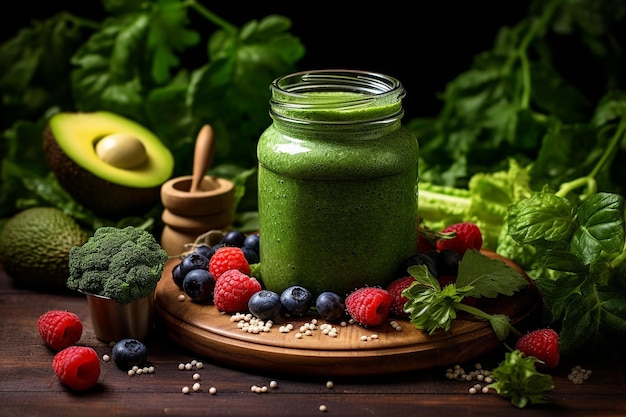
In the ceaseless human quest for optimal health, we have often looked to the land for our sustenance, cultivating vast fields and raising livestock. Yet, beneath the shimmering surface of our planet’s oceans and even in unassuming freshwater ponds, lies an ancient, vibrant, and extraordinarily potent kingdom that is only now beginning to reclaim its rightful place in our nutritional narrative: algae. These microscopic titans, the very bedrock of aquatic ecosystems, represent not just a food source, but a profound answer to many of the modern diet’s most pressing deficiencies and the planet’s most urgent sustainability challenges.
Imagine a world where your daily smoothie isn’t just a blend of fruits and greens, but a potent draught imbued with the life force of the ocean, a marine multivitamin that transcends the synthetic confines of a pill. This isn’t science fiction; it’s the burgeoning reality of integrating algae into our diets. For the knowledgeable seeker of wellness, the allure of algae isn’t merely a trend; it’s an intelligent evolution in dietary practice. We’re talking about spirulina’s spiraled cyanobacteria, chlorella’s dense chlorophyll, and the astaxanthin-rich microalgae that give flamingos their blush. These aren’t just obscure organisms; they are meticulously crafted biochemical factories, refined over billions of years, offering a nutritional profile that often surpasses their terrestrial counterparts.
This journey into the emerald depths will illuminate five compelling reasons why these ancient powerhouses, these unassuming marine multivitamins, deserve a permanent residency in your daily blend, transforming your smoothie from merely nutritious to truly extraordinary. Prepare to delve beyond the surface and discover the profound impact of algae, not just on your body, but on the very future of sustainable nutrition.
1. The Complete Nutritional Powerhouse: A Symphony of Macronutrients and Micronutrients
Our modern diets, despite their apparent abundance, are often nutritionally impoverished. We grapple with protein deficiencies, micronutrient gaps, and an overall lack of bioavailable compounds. Enter algae, the unassuming hero poised to fill these voids with an elegance and efficiency that few other food sources can match. Algae are, quite simply, nature’s most sophisticated and ancient nutritional factories, capable of synthesizing an astonishing array of compounds directly from sunlight, water, and simple minerals.
Let’s begin with protein, often hailed as the building block of life. For those navigating plant-based diets, or simply seeking more sustainable protein sources, the question of "complete" protein — containing all nine essential amino acids — is paramount. Many plant proteins fall short in one or more of these crucial amino acids. Algae, however, often stand as proud exceptions. Spirulina, for instance, boasts an impressive protein content, often ranging from 50-70% of its dry weight, making it significantly more protein-dense than beef, poultry, or fish on a per-calorie basis. More importantly, it provides a complete amino acid profile, rivaling or even surpassing animal proteins in its bioavailability and amino acid score. This means that every scoop of spirulina in your smoothie contributes to robust muscle repair, enzyme production, and neurotransmitter synthesis, underpinning virtually every physiological process in your body. Chlorella, another popular microalga, also offers a substantial protein punch, though typically slightly less than spirulina, still delivering a formidable array of amino acids vital for human health.
Beyond protein, the micronutrient density of algae is where its true "marine multivitamin" status shines. Imagine a single organism capable of concentrating a spectrum of vitamins and minerals that would typically require a carefully curated plate of diverse foods. Algae achieve this with effortless grace.
Consider the B vitamins, crucial for energy metabolism, nerve function, and DNA synthesis. Algae, particularly spirulina, are rich sources of several B vitamins, including B1 (thiamine), B2 (riboflavin), B3 (niacin), B6 (pyridoxine), and B9 (folate). While the presence of B12 in spirulina has been a subject of debate (often being an inactive analogue), some strains and fermentation methods are showing promise in delivering bioavailable forms, and even without it, the sheer density of other B vitamins is remarkable. Chlorella, too, contributes significantly to this complex, supporting everything from cellular energy production to cognitive function.
Then there are the fat-soluble vitamins: A, E, and K. Algae are phenomenal sources of provitamin A carotenoids, particularly beta-carotene, which the body converts into Vitamin A as needed. This form is safer than preformed Vitamin A from animal sources, as the body regulates its conversion, preventing toxicity. These carotenoids are not just precursors; they are powerful antioxidants in their own right, protecting cells from damage. Vitamin E, another potent antioxidant, is also present, safeguarding cell membranes. And Vitamin K, vital for blood clotting and bone health, is found in substantial amounts, particularly K1 (phylloquinone).
The mineral profile of algae is equally astounding, reflecting their origin in mineral-rich waters. They are excellent sources of iron, a common deficiency worldwide, often providing it in a highly bioavailable form. Magnesium, essential for over 300 enzymatic reactions, muscle function, and relaxation, is abundant. Calcium, critical for bone health, copper, zinc, selenium, manganese, and potassium – a veritable periodic table of essential elements are all found concentrated within these microscopic structures. For individuals concerned about mineral depletion in modern soils and the diminishing returns of conventional produce, algae offer a potent, natural solution.
Integrating algae into your smoothie is like adding a highly concentrated, naturally balanced multivitamin to your diet, derived directly from the most ancient and efficient producers on Earth. It’s not just about filling gaps; it’s about elevating your nutritional baseline, providing your body with the fundamental tools it needs to thrive at a cellular level, fueling everything from your energy levels to your immune response. The sheer density and spectrum of essential nutrients make algae an unparalleled nutritional powerhouse, a testament to billions of years of evolutionary refinement.
2. The Omega-3 Elixir: Direct from the Source
The importance of Omega-3 fatty acids, particularly eicosapentaenoic acid (EPA) and docosahexaenoic acid (DHA), for human health is by now well-established. From supporting brain function and cardiovascular health to modulating inflammation and promoting eye health, these polyunsaturated fats are indispensable. For decades, fish oil has been the go-to source, but this reliance comes with significant drawbacks: concerns about heavy metal contamination (mercury, PCBs), unsustainable fishing practices, and the unpleasant aftertaste that often accompanies fish oil supplements. What if there was a purer, more sustainable, and equally effective source?
The answer, as with so many nutritional quandaries, lies at the bottom of the food chain: algae.
Here’s the crucial insight: fish don’t produce Omega-3s. They accumulate them by consuming smaller fish, which in turn consume microalgae. Algae are the original, primary producers of EPA and DHA. By sourcing our Omega-3s directly from algae, we cut out the middle-fish, so to speak. This offers a multitude of advantages.
Firstly, purity. Algae grown in controlled environments are far less susceptible to the accumulation of environmental toxins like mercury, dioxins, and PCBs that can plague wild-caught fish. This provides a cleaner, safer source of these vital fats, especially appealing for pregnant women, children, and anyone concerned about minimizing toxin exposure.
Secondly, sustainability. The global demand for fish oil puts immense pressure on marine ecosystems, contributing to overfishing and threatening biodiversity. Cultivating algae for Omega-3s requires significantly fewer resources, minimal land use (often utilizing bioreactors or ponds), and does not deplete wild fish populations. It represents a truly sustainable paradigm for meeting our Omega-3 needs.
Thirdly, bioavailability and effectiveness. Algae-derived EPA and DHA are chemically identical to those found in fish oil and are equally bioavailable. Numerous studies have demonstrated that algal Omega-3 supplements can effectively raise blood levels of EPA and DHA, leading to comparable health benefits. For vegans and vegetarians, this is a game-changer, providing a direct, plant-based source of these long-chain Omega-3s without relying on the inefficient conversion of alpha-linolenic acid (ALA) from flax or chia seeds. While ALA is beneficial, the human body’s conversion rate to EPA and especially DHA is often very low (typically less than 10% for EPA and even less for DHA), making direct consumption of EPA/DHA crucial for optimal health.
The benefits of incorporating this algal elixir into your smoothie are profound. DHA is a major structural component of the brain and retina, crucial for cognitive function, memory, and visual acuity. EPA plays a significant role in modulating inflammation, supporting cardiovascular health by improving blood vessel function, reducing triglyceride levels, and potentially lowering blood pressure. Both contribute to a healthy mood and can help alleviate symptoms of depression and anxiety.
Imagine starting your day with a smoothie that not only tastes great but actively nourishes your brain, protects your heart, and helps to balance inflammatory responses throughout your body, all sourced ethically and sustainably. Varieties of microalgae like Schizochytrium sp. and Ulkenia sp. are particularly rich in DHA, while others provide a balanced EPA/DHA profile. As the research continues to unfold, the consensus is clear: algae are not just an alternative to fish oil; they are the superior, foundational source of the Omega-3s our bodies crave. By embracing algae, we are not just making a dietary choice; we are making an ecological statement, aligning our health with the health of the planet.
3. The Antioxidant Arsenal and Immune Modulator: Defending Your Cells from Within
In the relentless battle against oxidative stress, chronic inflammation, and the myriad of modern ailments they spawn, our bodies are constantly seeking allies. Free radicals, unstable molecules generated by metabolism and environmental factors, wreak havoc on our cells, contributing to aging and disease. This is where the extraordinary antioxidant and immune-modulating power of algae enters the fray, offering a sophisticated defense system refined over eons.
Algae are absolute powerhouses of unique and potent antioxidants, pigments that do more than just provide vibrant colors. They are biochemical superheroes, each with a specialized role in protecting the organism, and by extension, us.
One of the most celebrated algal antioxidants is astaxanthin. Often dubbed "the king of carotenoids," astaxanthin is responsible for the pink and red hues in salmon, shrimp, and flamingos – all of whom obtain it from consuming astaxanthin-rich microalgae like Haematococcus pluvialis. What makes astaxanthin so remarkable? Its unique molecular structure allows it to span the entire cell membrane, providing comprehensive protection against free radicals both inside and outside the cell. Unlike other antioxidants that deplete after neutralizing a free radical, astaxanthin is believed to be able to neutralize multiple free radicals repeatedly. Its antioxidant capacity is astonishing, estimated to be hundreds of times stronger than Vitamin E and significantly more potent than beta-carotene.
The benefits of astaxanthin are vast and well-researched. It can cross the blood-brain barrier and the blood-retinal barrier, offering unparalleled protection to the brain and eyes. This translates to potential improvements in cognitive function, reduced risk of age-related macular degeneration, and protection against UV-induced damage to the skin, acting as an "internal sunscreen." It also exhibits powerful anti-inflammatory properties, which can aid in recovery from exercise, reduce joint pain, and support overall immune health by modulating immune responses rather than suppressing them.
Another extraordinary pigment is phycocyanin, the vibrant blue pigment found predominantly in spirulina. Phycocyanin is not just visually stunning; it’s a potent antioxidant and anti-inflammatory compound unique to cyanobacteria. Research suggests phycocyanin can scavenge free radicals, inhibit pro-inflammatory enzymes, and protect against cellular damage. It has been studied for its potential neuroprotective effects, liver protection, and its ability to stimulate the production of blood cells, thereby supporting the immune system and enhancing recovery processes. Its ability to combat inflammation makes spirulina a valuable addition for anyone dealing with chronic inflammatory conditions or seeking to mitigate exercise-induced inflammation.



Post Comment