Small Cell, Big Impact: The Dense Nutritional Profile of Chlorella and Spirulina
In the vast tapestry of life, where macroscopic marvels often capture our imagination, it is sometimes the most diminutive organisms that hold the profoundest secrets. Among these microscopic titans, Chlorella and Spirulina stand as emerald and azure pillars, respectively, in the world of superfoods. These single-celled powerhouses, though often conflated, are distinct in their biology, yet remarkably convergent in their ability to deliver an unparalleled spectrum of nutrients. They embody the adage "small cell, big impact," offering a dense nutritional profile that tells a story of ancient wisdom, biological ingenuity, and modern wellness.
This journey into the heart of Chlorella and Spirulina will unravel their unique identities, dissect their extraordinary nutritional composition, explore the mechanisms behind their far-reaching health benefits, and illuminate why these microalgae are not merely supplements, but potent allies in the pursuit of optimal health. For the knowledgeable audience, we aim to delve beyond surface-level claims, probing the science that underpins their legendary status.
The Genesis of Green and Blue: Understanding Our Microalgal Protagonists
Before we embark on a detailed nutritional analysis, it’s crucial to distinguish between our two protagonists. While both are photosynthetic, microscopic, and rich in chlorophyll, they belong to different biological kingdoms, influencing their structure and some aspects of their nutritional bounty.
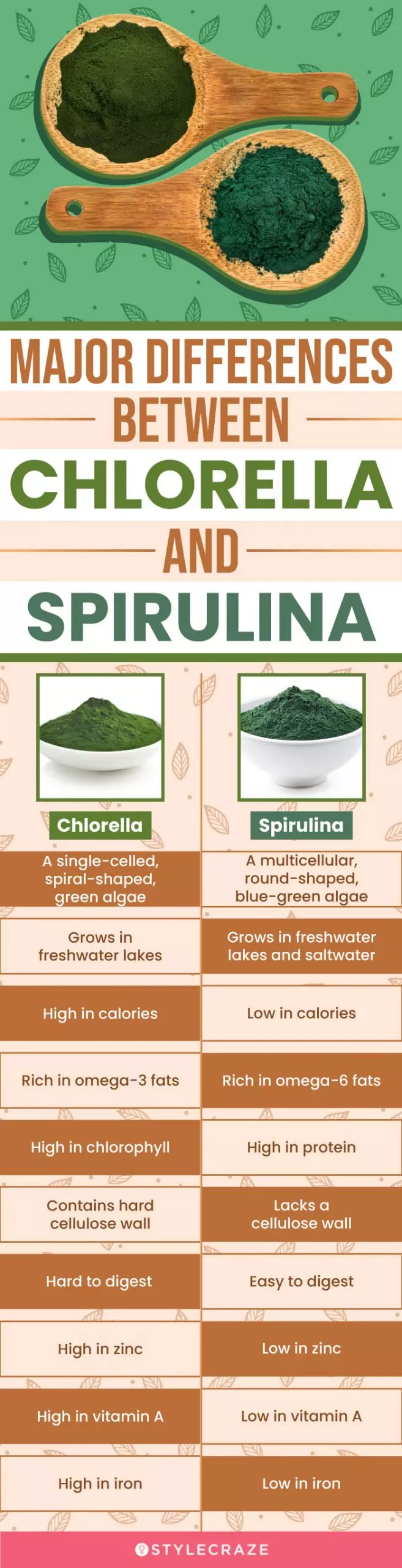
Chlorella: A eukaryotic, single-celled green freshwater alga, roughly 2 to 10 micrometers in diameter. Its name, derived from the Greek "chloros" (green) and Latin "ella" (small), perfectly describes its essence. Chlorella is characterized by a robust, indigestible cell wall, which requires processing (e.g., "cracked cell wall" or "broken cell wall") to make its contents bioavailable to humans. It reproduces rapidly, undergoing four daughter cell divisions every 20-24 hours, a testament to its powerful growth factor.
Spirulina: Technically not an alga in the same sense as Chlorella, Spirulina is a cyanobacterium (often referred to as blue-green algae) belonging to the genus Arthrospira. It is prokaryotic, meaning it lacks a true nucleus, and typically forms multicellular, spiral-shaped filaments, visible to the naked eye under certain conditions. Spirulina thrives in alkaline, warm freshwater environments, often in tropical and subtropical regions. Unlike Chlorella, it has a soft, easily digestible cell wall composed of mucopolysaccharides, meaning its nutrients are readily accessible without special processing.
Their evolutionary paths diverged billions of years ago, yet both harnessed the sun’s energy to create a living testament to nutritional density. Their story is one of survival and thriving, converting simple elements into complex organic compounds that nourish life itself.
A Symphony of Nutrients: Deconstructing the Dense Profile
The "big impact" of these small cells stems directly from their astonishingly comprehensive nutritional profiles. Far from being mere sources of isolated vitamins, Chlorella and Spirulina offer a synergistic blend of macro and micronutrients, unique bioactive compounds, and potent antioxidants that work in concert to support a multitude of bodily functions.
1. The Powerhouse of Protein
Both Chlorella and Spirulina are exceptional sources of complete protein, containing all nine essential amino acids necessary for human health.
- Spirulina: Often boasts a protein content ranging from 55-70% of its dry weight, making it one of the most protein-dense foods on the planet, surpassing beef, chicken, and soybeans on a per-gram basis. Its protein is highly digestible (around 85-95%) due to its soft cell wall, making its amino acids readily available for absorption and utilization.
- Chlorella: Typically contains 50-60% protein by dry weight. While slightly lower than Spirulina, it still represents a formidable protein source, particularly for vegetarians and vegans. The processing of its cell wall is crucial for maximizing protein digestibility and bioavailability.
The amino acid profile of both microalgae is remarkably balanced, rivaling that of animal protein, yet without the associated saturated fats or cholesterol. This makes them invaluable for muscle repair, enzyme production, hormone synthesis, and overall cellular regeneration.
2. A Spectrum of Vitamins
The vitamin content of Chlorella and Spirulina reads like a comprehensive multivitamin label, delivering essential cofactors for countless biochemical reactions.
- B-Complex Vitamins: Both are rich in B vitamins, crucial for energy metabolism, nervous system function, and red blood cell formation. Spirulina, in particular, is often highlighted for its Vitamin B12 content. However, for the knowledgeable audience, it’s important to note a nuance: while Spirulina contains significant amounts of B12, a portion of it is often in the form of "pseudovitamin B12" (analogs that are inactive in humans). While it’s not a reliable sole source of active B12 for vegans, it still contributes to the overall B vitamin profile, which includes B1 (thiamine), B2 (riboflavin), B3 (niacin), B6 (pyridoxine), and B9 (folate). Chlorella also provides a good range of these B vitamins.
- Vitamin K: Important for blood clotting and bone health, found in both.
- Vitamin A (Beta-Carotene): Both are outstanding sources of beta-carotene, a powerful antioxidant and precursor to Vitamin A. Spirulina contains significantly more beta-carotene than carrots, providing crucial support for vision, immune function, and skin health. Chlorella also contributes a substantial amount.
- Vitamin C and E: While not as abundant as in some fruits, these essential antioxidants are present, further bolstering their free-radical scavenging capabilities.
3. Mineral Magnificence
The mineral content of these microalgae reflects the richness of their cultivation environments, providing vital electrolytes and trace elements.
- Iron: Both are excellent plant-based sources of iron, especially crucial for individuals following plant-based diets or those at risk of iron deficiency anemia. Spirulina, in particular, boasts highly bioavailable iron. Iron is fundamental for oxygen transport, energy production, and cognitive function.
- Magnesium: Essential for over 300 enzymatic reactions, muscle and nerve function, blood glucose control, and blood pressure regulation. Both microalgae provide substantial amounts.


Post Comment