The Unseen Sentinel: Quercetin, Onions, and the Ancient Dance of Immunity
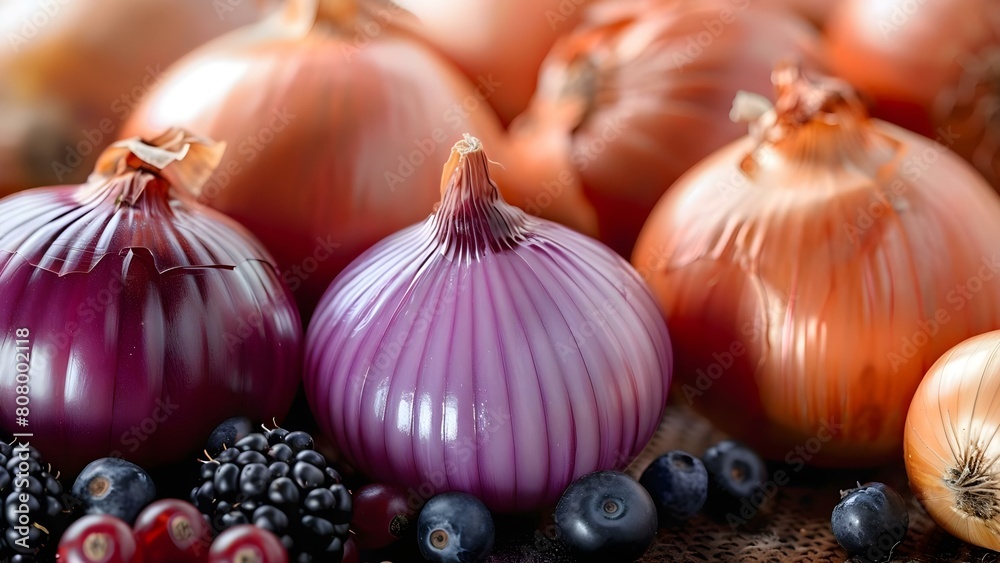
In the bustling theatre of modern life, where headlines often scream of novel pathogens and complex pharmaceutical interventions, it’s easy to overlook the quiet heroes that have stood guard over human health for millennia. Among these unsung champions, few hold as much unassuming power as the humble onion, and within its pungent layers lies a molecular marvel: Quercetin. This isn’t just a story of a nutrient; it’s a narrative woven through history, etched in cellular biology, and culminating in a compelling argument for why this everyday kitchen staple is, in essence, a natural defense powerhouse. For the discerning mind seeking deeper understanding, let us embark on a journey to unravel the intricate relationship between Quercetin, our immune system, and the remarkable legacy of the onion.
The Onion’s Enduring Legacy: More Than Just Flavor
Before we delve into the microscopic world of molecules and cells, let’s acknowledge the onion itself. A member of the Allium family, alongside garlic, leeks, and chives, the onion has been cultivated for over 7,000 years. Its journey from wild plant to global culinary cornerstone is a testament to its versatility, flavor, and, crucially, its perceived medicinal value.
Ancient Egyptians revered onions, depicting them in hieroglyphs and placing them in tombs with pharaohs, believing their strong scent and shape symbolized eternity. Greek athletes consumed them to fortify their strength, and Roman gladiators rubbed them on their muscles for vigor. Throughout the Middle Ages, onions were prescribed for headaches, snakebites, and hair loss, their medicinal properties embedded in folk remedies and traditional medicine systems across continents. From Ayurveda to Traditional Chinese Medicine, the onion’s role transcended mere sustenance; it was an acknowledged guardian of health.
Modern science, with its sophisticated tools and methodologies, is now beginning to dissect and validate these ancient observations, pulling back the layers (quite literally) to reveal the active compounds responsible for the onion’s enduring reputation. And at the heart of this revelation stands Quercetin.
Quercetin Unveiled: A Molecular Maestro
Quercetin is a flavonoid, a subclass of polyphenols – potent plant compounds celebrated for their health-promoting attributes. Found abundantly in a variety of fruits, vegetables, and grains, Quercetin is particularly concentrated in the skin and outer layers of onions, apples, berries, and citrus fruits, as well as in leafy greens, red wine, and tea. Its distinctive yellow pigment hints at its chemical prowess, but its true power lies in its complex molecular structure, which allows it to interact with biological systems in profoundly beneficial ways.
Chemically, Quercetin is a flavanol, specifically 3,3′,4′,5,7-pentahydroxyflavone. Its five hydroxyl groups are key to its bioactivity, enabling it to act as a formidable antioxidant and to modulate numerous cellular signaling pathways. While Quercetin rarely exists in its free form in nature, it’s typically found conjugated with sugar molecules (glycosides), such as Quercetin-3-O-rutinoside (rutin) or Quercetin-3-O-glucoside. These glycosidic forms are important for its absorption and metabolism in the human body, where gut microbiota play a crucial role in cleaving off the sugar moieties, releasing the aglycone (free Quercetin) for absorption into the bloodstream.
For a knowledgeable audience, it’s vital to appreciate that Quercetin isn’t a blunt instrument; it’s a molecular maestro, conducting a symphony of cellular responses that culminate in enhanced immune resilience.
The Immune System: A Complex Choreography
To truly grasp Quercetin’s significance, we must first briefly understand the intricate dance of the immune system. Our body’s defense network is a marvel of evolutionary engineering, constantly surveying for threats and mounting appropriate responses. It’s broadly divided into two interconnected branches:
-
Innate Immunity: This is our first line of defense, a rapid and non-specific response. It includes physical barriers (skin, mucous membranes), chemical barriers (stomach acid, antimicrobial peptides), and cellular components like macrophages, neutrophils, and natural killer (NK) cells. These cells quickly identify and engulf pathogens or destroy infected cells, initiating inflammation – a crucial process that brings more immune cells to the site of infection.
-
Adaptive Immunity: This branch is slower but highly specific and possesses memory. It involves T-lymphocytes (T-cells) and B-lymphocytes (B-cells). T-cells orchestrate immune responses (helper T-cells) or directly kill infected cells (cytotoxic T-cells). B-cells produce antibodies that specifically target and neutralize pathogens. The hallmark of adaptive immunity is its ability to remember past encounters, allowing for a faster and more robust response upon re-exposure.
Central to both branches is inflammation. While acute inflammation is vital for healing and pathogen clearance, chronic, unresolved inflammation is a destructive force, implicated in a vast array of diseases, from cardiovascular disease and diabetes to neurodegenerative disorders and cancer. The delicate balance between pro-inflammatory and anti-inflammatory signals is paramount for maintaining health.
Quercetin’s Multifaceted Immune Modulations: The Hero’s Arsenal
Now, let’s explore how Quercetin, derived from our humble onion, intervenes in this complex immune choreography, acting as a powerful modulator and fortifier.
1. The Antioxidant Powerhouse: Quenching the Flames of Oxidative Stress
One of Quercetin’s most well-established roles is its potent antioxidant activity. During normal metabolic processes and especially during infection or stress, our cells produce reactive oxygen species (ROS) and reactive nitrogen species (RNS) – commonly known as free radicals. While some ROS are necessary for cellular signaling and immune function (e.g., oxidative burst by phagocytes to kill pathogens), an imbalance, known as oxidative stress, can damage cellular components like DNA, proteins, and lipids. This damage can impair immune cell function, perpetuate inflammation, and accelerate aging.
Quercetin, with its specific chemical structure, acts as a direct scavenger of these free radicals. It can donate electrons to stabilize them, thereby neutralizing their destructive potential. Beyond direct scavenging, Quercetin also upregulates the body’s endogenous antioxidant defense systems, such as glutathione, superoxide dismutase (SOD), and catalase, effectively boosting our internal protection mechanisms. By mitigating oxidative stress, Quercetin helps preserve the integrity and optimal function of immune cells, ensuring they are ready to respond effectively to threats.
2. The Anti-inflammatory Maestro: Harmonizing the Immune Response
Perhaps Quercetin’s most profound impact on immunity stems from its formidable anti-inflammatory properties. Unlike general anti-inflammatory drugs that can suppress the entire immune response, Quercetin appears to modulate inflammation, dampening excessive or chronic responses while preserving essential protective functions.
Its mechanisms are multi-pronged:


Post Comment