Taro: The Millennia-Old Superfood Story Waiting for its Modern Revival
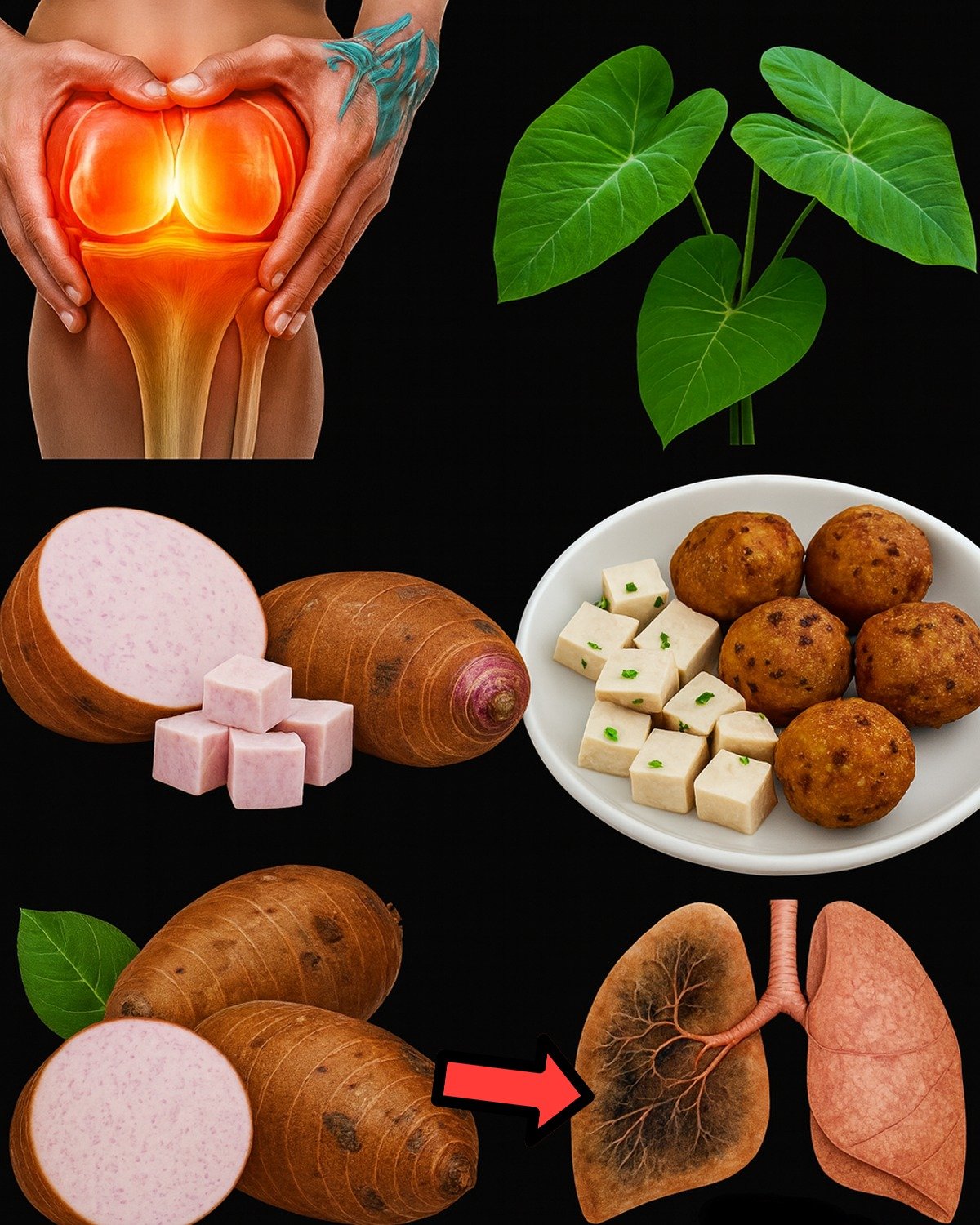
In a world obsessed with fleeting food trends, where exotic berries and obscure seeds vie for the coveted "superfood" title, it’s easy to overlook the quiet giants that have sustained civilizations for millennia. Among these unsung heroes, one stands tall, or rather, deep within the earth: Taro. A root vegetable with a history as rich and complex as its flavour, taro (Colocasia esculenta) is not merely a carbohydrate source; it is a living chronicle of human migration, cultural ingenuity, and enduring resilience. For the discerning palate and the curious mind, taro offers a story that stretches back into the mists of prehistory, a narrative of sustenance, spirituality, and surprising nutritional prowess that modern society is only just beginning to rediscover.
The Genesis: A Root’s Ancient Odyssey
The story of taro begins, as many great sagas do, in the verdant, humid heart of Southeast Asia. While its precise domestication point remains a subject of archaeological debate, most evidence points to a sprawling region encompassing parts of India, Bangladesh, Myanmar, Thailand, and China, dating back at least 10,000 years, perhaps even more. Here, in the lush river valleys and wetlands, early humans encountered a wild plant with heart-shaped leaves and a starchy underground corm. Through generations of careful observation and selective cultivation, they transformed this wild species into the domesticated taro we know today.
This was no ordinary plant; it was a marvel of early agriculture. Taro thrived in wetlands, making it one of the earliest crops to be specifically adapted for wet cultivation, akin to rice. Its ability to flourish in waterlogged conditions, often considered unsuitable for other crops, made it invaluable. But taro was also adaptable, with varieties capable of growing in drier, upland conditions, demonstrating a remarkable flexibility that would prove crucial to its global journey.
From its Asian cradle, taro embarked on one of the most remarkable botanical migrations in human history. It travelled hand-in-hand with the Austronesian voyagers, intrepid seafarers who, starting around 3000 BCE, spread across the vast expanse of the Pacific Ocean. Aboard their sturdy outrigger canoes, alongside families, livestock, and tools, these pioneers carried precious bundles of taro corms. For these voyagers, taro was not just food; it was life itself. It was a reliable source of energy for long journeys and the foundation for new settlements on countless islands, from the remote atolls of Micronesia to the volcanic peaks of Hawaii and the far-flung shores of Easter Island.
Each stop on this journey saw taro adapt, diversify, and become woven into the fabric of emerging cultures. In Hawaii, it became "kalo," the spiritual ancestor of the Hawaiian people according to their mythology, revered as a deity. In Fiji, it was "dalo." In New Zealand, the cooler climate limited its spread, but its memory remained.
But the Pacific was not taro’s only destination. From Asia, it also spread westward, reaching India and then crossing into Africa around 2,000 to 3,000 years ago. Here, it became known by a multitude of names – cocoyam, macabo, eddo, dasheen – and became a staple for millions, especially in West and Central Africa. From Africa, it then made its way across the Atlantic with the transatlantic slave trade, taking root in the Caribbean and parts of South America, becoming integral to the culinary traditions of Haiti, Jamaica, Barbados, and beyond.
This epic journey, spanning continents and oceans, speaks volumes about taro’s inherent value. It wasn’t just transported; it was cherished, cultivated, and ultimately became a foundational crop for diverse societies, a testament to its reliability and versatility in sustaining human life across vastly different environments.
The Cultural Crucible: Taro’s Soulful Embrace
To understand taro as a superfood, one must first grasp its profound cultural significance. For many indigenous communities, taro is more than just sustenance; it is intertwined with identity, spirituality, and social structure. Its story is told not just in nutritional labels, but in myths, rituals, and the daily rhythms of life.
Nowhere is this connection more evident than in Hawaii. Here, "kalo" is revered as the elder brother of the Hawaiian people. The legend of Hāloa tells of Wākea (sky father) and Hoʻohokukalani (star-forming daughter) who had a stillborn child, whom they buried. From this burial site grew the first kalo plant. Their second child, a healthy son, was named Hāloa (meaning "long breath" or "everlasting breath") in honour of his elder brother. This myth establishes a deep genealogical connection: the kalo plant feeds the people, and in return, the people care for the kalo, fostering a reciprocal relationship of respect and interdependence.
The cultivation of kalo in Hawaii was a sophisticated feat of agro-engineering, involving intricate loʻi (terraced, irrigated pond fields) that channeled water from mountain streams. These systems were not just efficient; they were sacred, demanding communal effort and adherence to specific practices. The preparation of poi, the traditional fermented kalo paste, was also a ritual, its consistency dictating its name (one-finger, two-finger, three-finger poi, depending on how many fingers it took to scoop and eat). Poi was a dietary cornerstone, valued for its ease of digestion and nutritional density, especially for infants and the infirm. The leaves, known as luʻau, were cooked into hearty stews, giving the Hawaiian feast its name.
Beyond Hawaii, taro’s cultural imprints are equally deep:
- Samoa and Tonga: Taro remains a staple, often baked in an umu (earth oven) and served at important ceremonies. Its preparation is a communal affair, strengthening social bonds.
- Japan: Known as satoimo, taro has been cultivated for centuries and is a traditional ingredient in New Year’s dishes, soups, and stews. Its sticky texture is prized.
- China: Taro is used in both savoury and sweet dishes, from stir-fries and braises to taro-filled desserts and bubble tea. Its versatility allows it to seamlessly integrate into diverse regional cuisines.
- Philippines: Gabi (taro) is a common ingredient in stews like sinigang and desserts like ginataang bilo-bilo.
- Africa and the Caribbean: As cocoyam or dasheen, it forms the base for thick porridges like fufu or is boiled, roasted, and mashed. The leaves are vital for dishes like callaloo, a leafy green stew that is a staple in many Caribbean nations.
These examples illustrate that taro’s role transcends mere calories. It is a symbol of heritage, a medium for community building, a link to ancestors, and a source of deep cultural pride. Its story is one of adaptation, not just of a plant to its environment, but of people to their food, creating a legacy that echoes through generations.
Unearthing the Nutritional Goldmine: Why "Superfood"?
Given its venerable history and cultural reverence, it’s perhaps unsurprising that taro possesses a formidable nutritional profile that makes it a true ancient superfood. While modern science often focuses on exotic newcomers, taro offers a wealth of benefits rooted in its fundamental composition.
1. Complex Carbohydrates and Sustained Energy:
Taro is primarily a source of complex carbohydrates, providing sustained energy without the sharp spikes and crashes associated with simple sugars. Its starch is composed of small granules, which, particularly when cooked thoroughly (as it always should be), are generally considered easier to digest than starches from some other root crops. For athletes, manual labourers, or anyone needing consistent energy, taro is an excellent choice.
2. Abundant Dietary Fiber:
One of taro’s most significant advantages is its high fiber content. A single serving can provide a substantial portion of the recommended daily intake. Dietary fiber is crucial for:
- Digestive Health: It promotes regular bowel movements, prevents constipation, and supports a healthy gut microbiome by acting as a prebiotic, feeding beneficial gut bacteria.


Post Comment