Anti-Aging from the Deep: Can Algae Slow Down Cellular Decline and Unlock the Ocean’s Elixir of Youth?
I. Prologue: The Ocean’s Timeless Whisper
For millennia, humanity has been captivated by the relentless march of time, a fascination often tinged with a yearning for eternal youth. From ancient alchemists seeking the philosopher’s stone to modern scientists dissecting the minutiae of cellular senescence, the quest to understand, and perhaps even reverse, aging remains one of our most enduring endeavors. We pore over ancient texts, scrutinize genetic codes, and experiment with cutting-edge molecules, all in the hope of extending our vibrant years. Yet, often, the most profound answers lie not in laboratories humming with synthetic compounds, but in the untouched sanctuaries of our planet, places where life has thrived, adapted, and evolved for eons.
One such sanctuary, vast, mysterious, and teeming with an unparalleled diversity of life, is the ocean. It is a realm of extreme pressures, fluctuating temperatures, and unique biochemical challenges, a crucible that has forged organisms with extraordinary resilience and protective mechanisms. Among these ancient inhabitants, none hold more quiet promise in the anti-aging narrative than algae. These unassuming photosynthetic powerhouses, ranging from microscopic single-celled organisms to vast underwater forests, represent some of the oldest and most successful life forms on Earth. They have witnessed the rise and fall of empires, survived cataclysmic events, and perfected the art of self-preservation. Could the secrets to slowing cellular decline, to mitigating the visible and invisible hallmarks of aging, lie hidden within their verdant, crimson, and golden fronds? This article delves into the profound potential of algae, exploring how these marine marvels might offer a potent elixir from the deep, helping us to navigate the intricate dance of time with greater grace and vitality.
II. The Intricate Dance of Time: Understanding Cellular Aging
Before we plunge into the depths of algal biochemistry, it’s crucial for a knowledgeable audience to understand the multifaceted nature of aging itself. It’s not merely a linear progression but a complex symphony of interconnected cellular and molecular dysfunctions, often referred to as the "hallmarks of aging." These processes accumulate over time, ultimately leading to tissue and organ decline, and manifesting as the wrinkles, reduced energy, and increased disease susceptibility we associate with growing older.
- Oxidative Stress: Perhaps the most widely recognized culprit, oxidative stress occurs when there’s an imbalance between the production of reactive oxygen species (ROS), or "free radicals," and the body’s ability to detoxify them. These highly reactive molecules, generated by metabolism and environmental factors (UV radiation, pollution), damage cellular components like DNA, proteins, and lipids, contributing to inflammation and cellular senescence.
- Chronic Inflammation ("Inflammaging"): While acute inflammation is a vital protective response, chronic, low-grade inflammation that persists without resolution is highly detrimental. Often fueled by oxidative stress and cellular debris, "inflammaging" contributes to numerous age-related diseases, from cardiovascular conditions to neurodegeneration.
- Glycation and Advanced Glycation End Products (AGEs): This process involves the non-enzymatic reaction of sugars with proteins or lipids, forming AGEs. These sticky compounds accumulate in tissues, stiffening collagen, impairing protein function, and promoting oxidative stress and inflammation, contributing to skin aging, atherosclerosis, and diabetic complications.
- Mitochondrial Dysfunction: Mitochondria are the powerhouses of our cells, generating ATP (energy). With age, mitochondrial efficiency declines, leading to reduced energy production, increased ROS leakage, and impaired cellular function. This directly impacts everything from muscle strength to cognitive function.
- Telomere Shortening: Telomeres are protective caps at the ends of our chromosomes. With each cell division, telomeres shorten. Once they reach a critical length, the cell either enters senescence (stops dividing) or undergoes apoptosis (programmed cell death). This limits the replicative capacity of cells and contributes to tissue degeneration.
- Cellular Senescence: Senescent cells are "zombie cells" that stop dividing but remain metabolically active, secreting a pro-inflammatory cocktail of molecules (the Senescence-Associated Secretory Phenotype, or SASP). These cells accumulate with age, driving chronic inflammation and damaging surrounding healthy tissue.
- Stem Cell Exhaustion: Our bodies rely on stem cells to repair and regenerate tissues. With age, the number and function of these crucial progenitor cells decline, impairing the body’s ability to heal and maintain itself.
- Altered Intercellular Communication: The intricate signaling networks between cells become disrupted with age, leading to miscommunication and impaired tissue function.
- Epigenetic Alterations: While our DNA sequence remains largely constant, epigenetic modifications (like methylation and histone modification) that regulate gene expression change with age, leading to inappropriate gene activation or silencing, contributing to cellular dysfunction.
Understanding these intertwined mechanisms provides the framework through which we can evaluate the anti-aging potential of any compound, including those derived from the ocean’s remarkable algal inhabitants.
III. A Glimpse into the Ocean’s Pharmacy: Why Marine Life?
The marine environment is a vast, largely unexplored frontier for scientific discovery. Its unique physical and chemical conditions – intense UV radiation at the surface, crushing pressure in the depths, extreme temperatures, and often nutrient-poor waters – have forced marine organisms to develop extraordinary biochemical adaptations for survival. This evolutionary pressure has resulted in the synthesis of novel compounds with unparalleled bioactivity.
Algae, in particular, are exceptional biofactories. As primary producers, they form the base of the marine food web, absorbing nutrients and sunlight to create complex organic molecules. Their sessile nature (most are rooted or floating) means they cannot flee from environmental threats. Instead, they must synthesize a sophisticated arsenal of protective compounds to defend against UV radiation, oxidative stress, pathogens, and herbivores. These protective mechanisms, honed over billions of years, are precisely what make them so intriguing for human anti-aging applications. The ocean, therefore, isn’t just a body of water; it’s a living, breathing pharmacy, waiting to reveal its secrets.
IV. The Algal Kingdom: A Spectrum of Life and Longevity
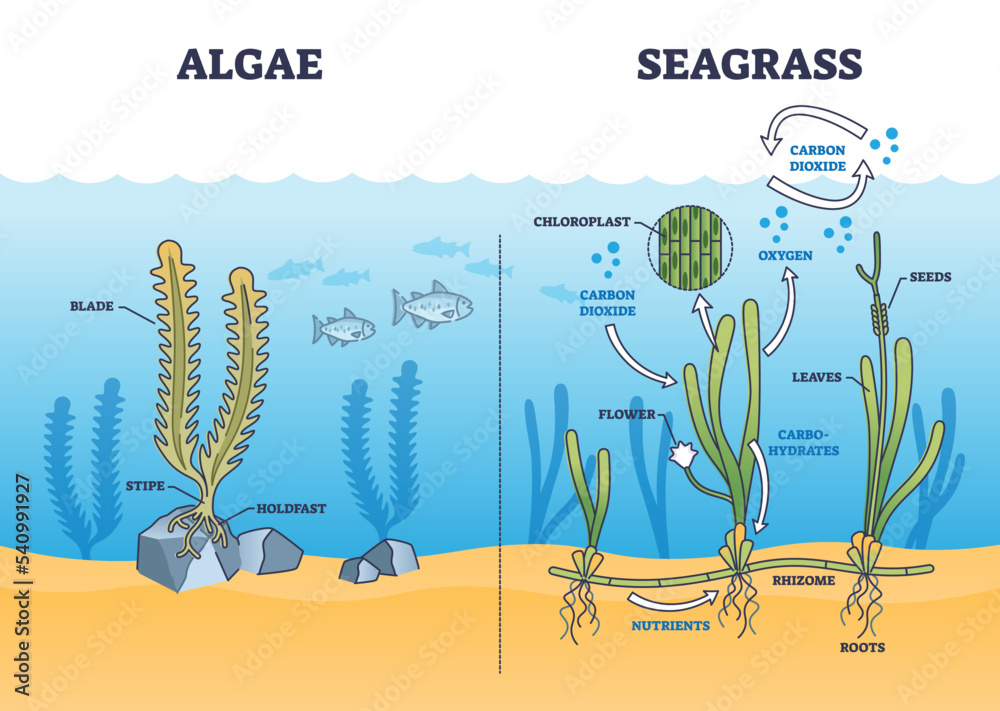
The term "algae" encompasses an incredibly diverse group of photosynthetic organisms, ranging from microscopic phytoplankton to macroscopic seaweeds that can grow meters long. Despite their varied appearances, they share a common thread: their ability to harness solar energy and produce a wealth of bioactive compounds.
We generally categorize algae into two main groups, with further subdivisions:
- Microalgae: These are single-celled or simple colonial organisms, often invisible to the naked eye. Examples include Spirulina, Chlorella, and Haematococcus pluvialis. They are prolific producers of highly concentrated nutrients and specific biomolecules due to their rapid growth rates and often harsh living conditions.
- Macroalgae (Seaweeds): These are multicellular, larger algae, commonly found along coastlines. They are typically divided by their dominant photosynthetic pigments:
- Brown Algae (Phaeophyceae): Rich in fucoxanthin, fucoidans, and phlorotannins. Examples include Laminaria (kelp), Fucus (bladderwrack), and Undaria (wakame).
- Red Algae (Rhodophyta): Known for carrageenans, agar, and mycosporine-like amino acids (MAAs). Examples include Chondrus crispus (Irish moss) and Porphyra (nori).


Post Comment