Anthocyanins & Antioxidants: Decoding the Healing Colors of Flowers – A Story of Nature’s Deepest Wisdom
The world, in its vibrant tapestry, whispers ancient secrets through the hues of its flora. From the fiery blush of a rose at dawn to the deep indigo of a twilight violet, flowers do not merely exist to charm our senses. Their dazzling spectrum, a silent symphony of color, conceals a profound story of survival, adaptation, and an unparalleled gift to life itself. At the heart of this chromatic enigma lies a group of remarkable compounds: anthocyanins. These pigments, responsible for nearly every red, purple, and blue seen in the plant kingdom, are far more than just visual attractants. They are potent defenders, evolutionary masterpieces, and, as modern science increasingly reveals, powerful allies in the quest for human health.
To decode the healing colors of flowers is to embark on a journey that bridges millennia of human observation with the cutting-edge of molecular biology. It is a story told in the language of chemistry, ecology, and medicine – a narrative that begins with the humble bloom and extends to the very essence of well-being. For the knowledgeable mind, ready to delve beyond the surface, the saga of anthocyanins and antioxidants is a testament to nature’s intricate genius, a compelling argument for the wisdom embedded in every petal.
The Alchemical Palette: What Are Anthocyanins?
Our story begins at the molecular level, where the magic of color is first spun. Anthocyanins belong to a vast and diverse family of plant compounds called flavonoids, which themselves are part of the even larger group known as polyphenols. What sets anthocyanins apart is their distinct chemical structure: they are water-soluble vacuolar pigments, meaning they reside within the cell sap of plant cells. This unique placement allows them to dissolve readily and display their vibrant colors.
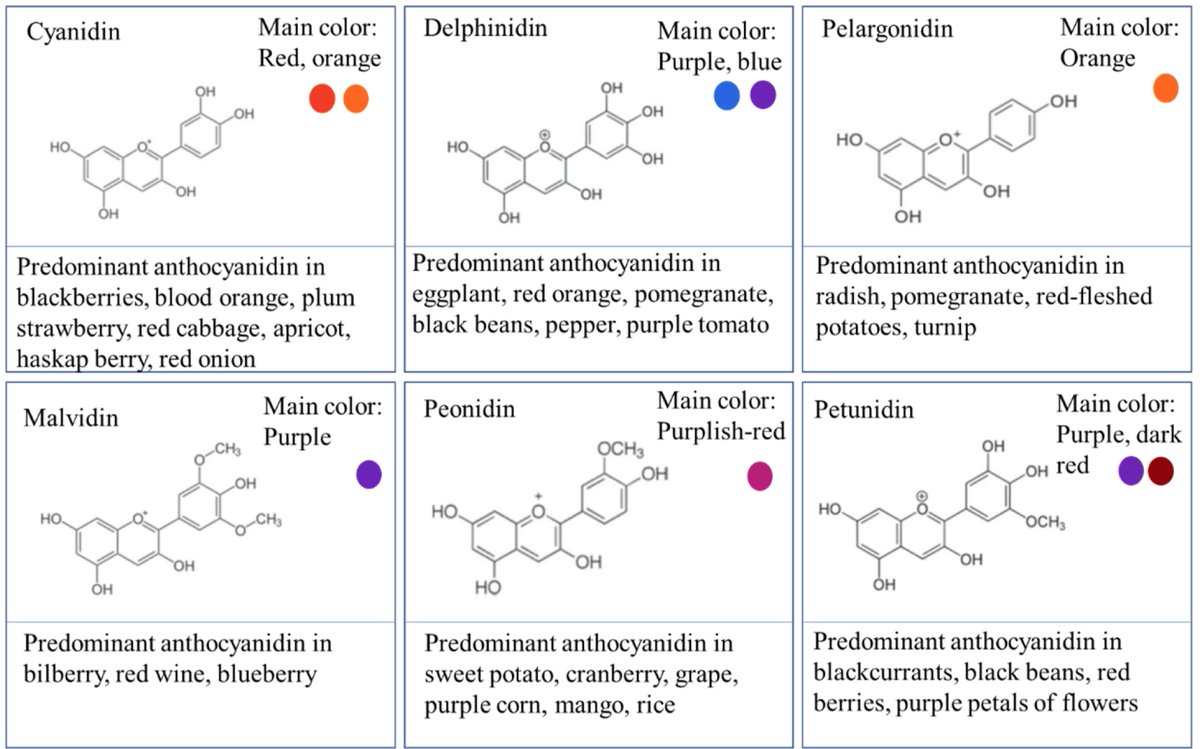
Chemically, an anthocyanin consists of an aglycone (the core anthocyanidin molecule) linked to one or more sugar molecules (glycosides). It’s the type and number of these sugar molecules, as well as their attachment points, that create the immense diversity within the anthocyanin family. There are six primary anthocyanidins commonly found in nature:
- Cyanidin: The most widespread, responsible for red and purple hues (e.g., cherries, raspberries).
- Delphinidin: Favors blue and purple colors (e.g., blueberries, eggplants).
- Malvidin: Contributes to deep purples and blues (e.g., grapes, red wine).
- Peonidin: Produces reddish-purple shades (e.g., peonies, cranberries).
- Petunidin: Gives rise to purple and red-purple colors (e.g., petunias, some berries).
- Pelargonidin: The source of bright orange and scarlet reds (e.g., strawberries, geraniums).
But the story of color is more nuanced than just these six heroes. The final perceived hue of a flower or fruit is not solely determined by its primary anthocyanidin. It’s a complex interplay of several factors:
- pH: The acidity or alkalinity of the cell sap is perhaps the most dramatic modulator. In acidic conditions, anthocyanins tend to be red; as pH increases towards neutral, they become purple; and in alkaline environments, they shift towards blue. Think of the chameleon-like qualities of a hydrangea, whose color can be manipulated by altering soil pH.
- Co-pigmentation: Other flavonoids (non-colored polyphenols) can stack with anthocyanins, altering their spectral properties and enhancing color intensity and stability. This "co-pigmentation" effect is crucial for achieving deep, rich colors.
- Metal Ions: Certain metal ions, such as aluminum and iron, can chelate with anthocyanins, stabilizing blue colors, often seen in flowers like cornflowers.
- Self-association: Anthocyanin molecules can aggregate, forming larger complexes that further influence color.
This intricate dance of chemistry results in the breathtaking palette we observe. It’s not just about the presence of anthocyanins, but the precise molecular architecture and environmental conditions that dictate whether a rose blazes scarlet or blushes fuchsia, or whether a delphinium shines sapphire or indigo. This biochemical dexterity is the first chapter in their evolutionary success story.
Nature’s Shield: The Evolutionary Purpose of Anthocyanins
Why would plants invest so much energy into producing these complex, colorful molecules? The answer lies in survival. For millennia, before humans began to appreciate their aesthetic or medicinal qualities, anthocyanins served as indispensable tools for the plant itself, embodying a sophisticated strategy for propagation and protection.
1. Pollinator Attraction: The Beacon of Life
The most immediate and visually obvious role of anthocyanins is their function as vibrant advertisements. Flowers rely on pollinators – insects, birds, and even bats – to transfer pollen and ensure reproduction. The striking reds, purples, and blues produced by anthocyanins act as powerful visual cues, drawing pollinators from afar. Bees, for instance, are particularly attracted to blue and violet hues, which anthocyanins readily provide. Some flowers even display UV patterns, invisible to the human eye but brightly visible to insects, created by anthocyanins, guiding pollinators to the nectar rewards. This co-evolutionary dance between plant and pollinator is a testament to the crucial role of these pigments in maintaining biodiversity.
2. Photoprotection: Shield Against the Sun’s Fury
Just like humans need sunscreen, plants need protection from excessive solar radiation, particularly ultraviolet (UV) light. UV-B radiation can damage DNA, proteins, and lipids within plant cells. Anthocyanins act as natural sunscreens, absorbing harmful UV radiation before it can reach vital photosynthetic machinery. They often accumulate in the epidermal layers of leaves and fruits, forming a protective barrier, especially in young leaves or those exposed to high light intensities, where they appear as a reddish blush. This protective mechanism is particularly evident in high-altitude plants or those growing in arid, sun-drenched environments.
3. Cold and Drought Tolerance: Resisting the Elements
Anthocyanins are not just fair-weather friends for plants. They play a critical role in helping plants cope with environmental stressors like cold temperatures and drought. During cold stress, anthocyanins can help stabilize cell membranes, preventing damage from ice crystal formation. In some plants, the accumulation of anthocyanins during autumn is thought to be part of the mechanism that prepares them for winter dormancy, allowing them to absorb light energy that might otherwise cause photooxidative damage when photosynthesis is inhibited by cold. Similarly, under drought conditions, anthocyanins can help mitigate oxidative stress caused by water deprivation, protecting cellular integrity.


Post Comment