Thai Basil vs. Mediterranean Basil: A Tale of Two Titans and Their Nutritional Legacies
In the verdant arena of culinary herbs, where flavor reigns supreme and aroma captivates, two titans stand tall: the classic Mediterranean Basil and the exotic Thai Basil. For centuries, they have graced our tables, infusing dishes with their distinct personalities, transporting us to sun-drenched Italian hillsides or bustling Southeast Asian street markets. But beyond their undeniable culinary charm, a deeper narrative unfolds – a story of profound nutritional power, of miniature pharmacies encapsulated in delicate leaves.
Our journey today is not merely a taste test, but a rigorous exploration into the hidden depths of these aromatic marvels. For the discerning palate and the health-conscious mind, the question arises: Which one packs the bigger nutritional punch? Is there a clear victor in this leafy skirmish, or do both offer a unique symphony of compounds that contribute to our well-being? Let us delve beyond the garnish, into the very essence of these beloved herbs, to uncover their secrets and reveal their true nutritional legacies.
The Contenders: A Botanical Pedigree
To truly appreciate their nutritional offerings, we must first understand the lineage of our contenders. Both Mediterranean Basil (often referred to as Sweet Basil or Genovese Basil) and Thai Basil belong to the illustrious Ocimum genus, a member of the mint family (Lamiaceae). This shared ancestry hints at commonalities in their chemical makeup, yet their distinct evolutionary paths and cultivation practices have sculpted them into unique botanical expressions.
Mediterranean Basil (Ocimum basilicum): The Classic Connoisseur
Our journey begins with Ocimum basilicum, the species that encompasses the vast majority of what we recognize as "sweet basil." Its origins are believed to lie in India and other tropical regions of Asia, where it has been cultivated for over 5,000 years. From there, it traveled west, becoming deeply entrenched in the culinary and cultural landscapes of the Mediterranean, particularly Italy, where it found its iconic home.
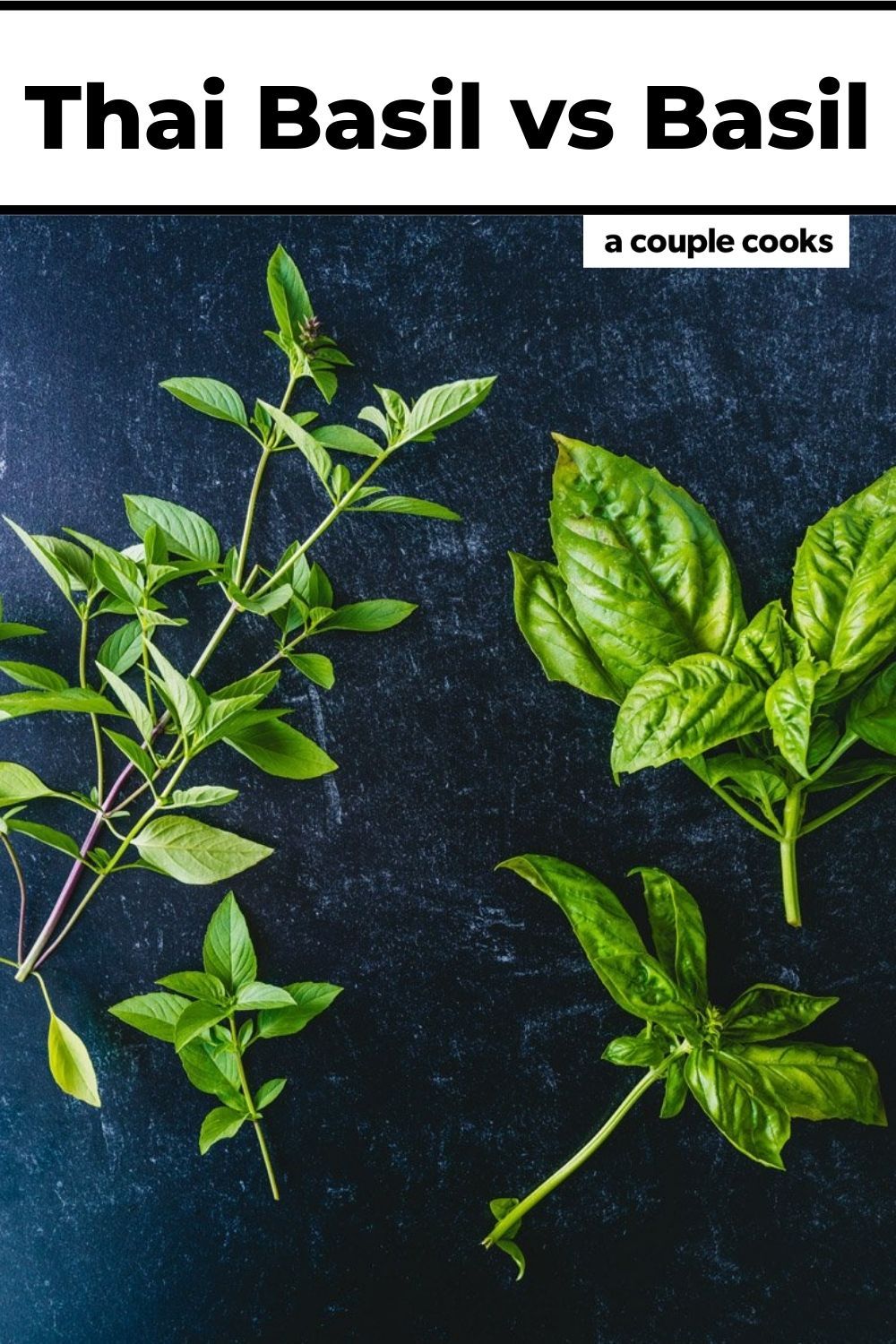
Mediterranean basil is characterized by its large, tender, glossy green leaves, which can range from bright emerald to a deeper jade. Its flavor profile is a complex dance of sweetness, a hint of pepperiness, and unmistakable notes of anise and clove. Common cultivars include Genovese (the quintessential pesto basil), Napoletano, and Lettuce Leaf, each offering subtle variations in leaf size and flavor intensity. It is the aromatic soul of countless dishes, a symbol of summer’s bounty and the fresh simplicity of Italian cuisine.
Thai Basil (Ocimum basilicum var. thyrsiflora and others): The Exotic Enigma
Across continents, in the vibrant culinary tapestry of Southeast Asia, thrives Thai Basil. While often referred to simply as "Thai Basil," it’s important to note that this term often encompasses a group of Ocimum basilicum cultivars distinct from the Mediterranean varieties, as well as sometimes being confused with Holy Basil (Ocimum tenuiflorum or Ocimum sanctum), which is a separate species with its own unique properties. For the purpose of this direct comparison, we will focus on the Ocimum basilicum cultivars commonly known as Thai Basil (like ‘Horapha’ or Thai Sweet Basil), which are distinct from Holy Basil.
Thai Basil typically features smaller, sturdier leaves than its Mediterranean cousin, often with serrated edges. A striking visual differentiator is its vibrant purple stems and sometimes purple flowers, a testament to the presence of specific pigments we will explore later. Its flavor is more robust and assertive, marked by a pronounced licorice or anise note, often accompanied by hints of spice, citrus, and a peppery finish. Unlike the delicate sweet basil, Thai basil is known for holding its flavor better under heat, making it a staple in cooked dishes. It is a vibrant counterpoint, a spicy whisper, and a sweet anise kiss that defines the complex, layered flavors of Thai, Vietnamese, and other Southeast Asian cuisines.
Despite their close botanical ties, these two basil types have evolved distinct chemical compositions, driven by environmental adaptation and selective cultivation, setting the stage for their unique nutritional contributions.
Culinary Canvas: Flavor, Function, and Cultural Resonance
The way an herb is used in cooking directly influences its practical nutritional impact. Are its beneficial compounds retained? Is it consumed in sufficient quantities to make a difference? The culinary roles of Mediterranean and Thai Basil offer fascinating insights.
Mediterranean Basil: The Freshness Factor
In Italian cuisine, Mediterranean basil is often celebrated for its fresh, vibrant character. It is the undisputed star of pesto, where its leaves are blended raw with pine nuts, garlic, Parmesan cheese, and olive oil. It adorns Caprese salads, providing a fragrant counterpoint to ripe tomatoes and mozzarella. It’s scattered generously over pizzas, stirred into marinara sauces, and tucked into bruschetta, typically added towards the end of cooking or even after, to preserve its delicate flavor and volatile aromatic compounds.
This preference for fresh or minimally cooked application is significant from a nutritional standpoint. Many vitamins (like Vitamin C) and volatile phytochemicals (which give basil its distinct aroma and therapeutic properties) are sensitive to heat. By adding sweet basil fresh or late in the cooking process, a greater proportion of these beneficial, heat-labile compounds are retained, maximizing its "nutritional punch" in specific dishes. It functions as a fresh flavor enhancer, a vibrant aromatic garnish, and a burst of green goodness.
Thai Basil: The Heat-Resistant Hero
Thai Basil, by contrast, is a workhorse in the high-heat kitchens of Southeast Asia. Its sturdier leaves and more robust flavor profile allow it to withstand longer cooking times without completely dissipating. It is an indispensable ingredient in various Thai curries – Panang, Red, and Green – where it is simmered alongside coconut milk, spices, and proteins, infusing the entire dish with its unique anise-like notes. It’s often tossed into stir-fries, contributing a spicy, aromatic depth that marries beautifully with chilies and soy. In Vietnamese pho, fresh sprigs of Thai basil are typically added to the hot broth just before serving, releasing their invigorating aroma.
While some heat-sensitive compounds will inevitably degrade during cooking, Thai Basil’s inherent robustness means that many of its beneficial phytochemicals, particularly the more stable ones, persist. Furthermore, its ability to contribute flavor and nutrition to heartier, cooked dishes means it’s often consumed in larger quantities as an integral part of the meal, rather than just a garnish. This integration into the main body of a dish allows for sustained exposure to its nutritional benefits. Its role is not merely an accent but a foundational flavor component that shapes the identity of the cuisine.
Understanding these distinct culinary applications helps us contextualize their nutritional contributions. While sweet basil might deliver a potent, fresh burst of certain compounds, Thai basil integrates its benefits more broadly into the cooked meal, offering a different, yet equally valuable, dietary contribution.
The Nutritional Showdown: Unpacking the Micronutrients
When we talk about "nutritional punch," it’s easy to focus solely on macronutrients like proteins, fats, and carbohydrates. However, for herbs consumed in relatively small quantities, the real power lies in their micronutrients – vitamins and minerals – and, more significantly, their vast array of phytochemicals.
It’s crucial to preface this by acknowledging that herbs, while incredibly nutrient-dense per calorie, are not primary sources of bulk nutrients like a serving of spinach or broccoli. Their impact is more akin to a concentrated nutritional booster, enhancing the overall quality of a meal.
Common Ground: Shared Strengths
Both Mediterranean and Thai Basil share a remarkable nutritional foundation, reflecting their common botanical heritage:
- Vitamin K: This fat-soluble vitamin is crucial for blood clotting and plays a vital role in bone health. Both basil types are exceptional sources of Vitamin K, with just a few sprigs contributing a significant portion of the daily recommended intake.
- Vitamin A (as Beta-carotene): As precursors to Vitamin A, the carotenoids present in basil are essential for vision, immune function, and skin health. While not as concentrated as in carrots, basil contributes meaningfully, especially when consumed regularly.
- Vitamin C: A powerful antioxidant, Vitamin C supports immune function, collagen production, and helps protect cells from oxidative damage. Both basils contain modest but notable amounts.


Post Comment