Nature’s Shield: The Role of Raspberries in Strengthening the Immune System
I. The Timeless Quest and a Crimson Secret
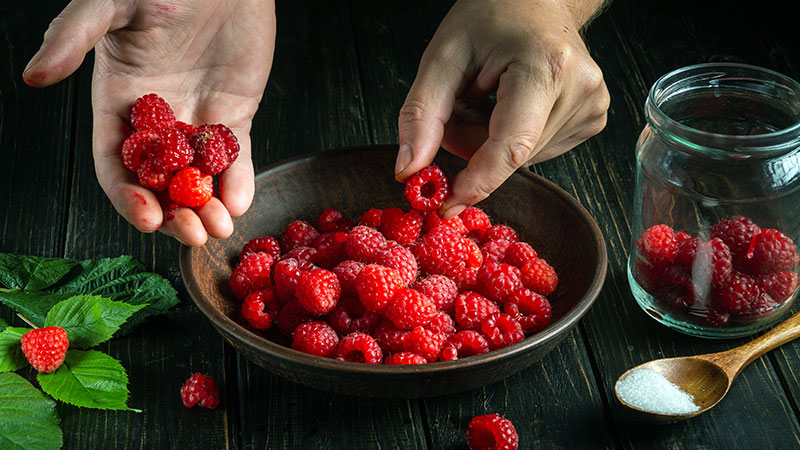
From the earliest dawn of human civilization, the quest for health and vitality has been an unwavering constant. We have looked to the earth, the forests, and the fields for remedies, nourishment, and protection against the myriad threats that challenge our existence. In this timeless search, nature, in its infinite wisdom, has often presented its most profound gifts in the humblest of packages. Among these unsung heroes, nestled amidst thorny canes and vibrant green leaves, lies a crimson jewel: the raspberry.
More than just a delightful burst of sweetness on the palate or a vibrant splash of color in a dessert, the raspberry harbors a secret – a complex tapestry of bioactive compounds meticulously woven by nature to fortify life. It is a berry that whispers tales of ancient forests, traditional healing, and modern scientific revelation. Our journey into the world of raspberries is not merely an exploration of its nutritional profile; it is an unfolding narrative, a story of how this seemingly simple fruit stands as a formidable ally in strengthening one of our most vital defenses: the immune system.
For the knowledgeable reader, already attuned to the intricate dance of macronutrients, micronutrients, and phytochemicals that define optimal health, this article will delve deeper. We will peel back the layers of this berry’s composition, unraveling the precise mechanisms by which it orchestrates a symphony of immune support. From its storied past etched in the annals of herbal medicine to its contemporary validation through rigorous scientific inquiry, we will discover how the raspberry, a veritable "Nature’s Shield," offers a potent, delicious, and accessible pathway to enhanced immune resilience.
II. A Legacy Etched in Time: The Raspberry’s Journey Through History and Culture
The story of the raspberry begins not in cultivated fields, but in the wild, untamed landscapes of Europe and Northern Asia. Rubus idaeus, the red raspberry, has graced these lands for millennia, its fruit a welcome find for foragers and its leaves recognized for their medicinal properties long before recorded history. Archaeological evidence suggests that humans have been consuming raspberries since the Stone Age, a testament to their intrinsic appeal and accessibility.
Ancient Greeks and Romans, ever keen observers of the natural world, were among the first to document the raspberry’s uses. Pliny the Elder, the esteemed Roman naturalist, made mention of raspberries in his Natural History, noting their presence and likely their consumption. While specific immune-boosting properties weren’t articulated in modern scientific terms, traditional healers and herbalists across various cultures intuitively understood the berry’s value. Raspberry leaves, in particular, became a cornerstone of folk medicine, often brewed into teas to aid digestion, alleviate menstrual discomfort, and prepare expectant mothers for childbirth – roles that, in retrospect, hint at their anti-inflammatory and tonic effects.
As civilizations advanced, so too did the understanding and cultivation of plants. By the Middle Ages, raspberries had transitioned from wild foraging to deliberate cultivation in monastic gardens and aristocratic estates. Their appeal spread, not just as a food source, but as a prized ingredient in tonics, elixirs, and poultices. The vibrant red hue, so characteristic of the berry, was often associated with vitality and blood, symbolically linking it to life-giving properties.
The journey of the raspberry continued across continents, carried by explorers and settlers. It found new homes in the Americas, where indigenous populations also held deep respect for native Rubus species, incorporating them into their diets and traditional healing practices. This global dissemination solidified the raspberry’s place, transforming it from a regional delicacy into a universally cherished fruit, its legacy woven into the fabric of human health and culinary tradition. This rich historical tapestry sets the stage for our modern understanding, revealing a fruit whose beneficial properties have been recognized, albeit through different lenses, for thousands of years – a true testament to its enduring power.
III. The Immune System: A Complex Fortress of Defense
To truly appreciate the raspberry’s contribution, we must first understand the intricate defense network it seeks to bolster: the human immune system. Far from a singular entity, the immune system is a sophisticated, multi-layered fortress, constantly vigilant, identifying and neutralizing threats ranging from microscopic bacteria and viruses to rogue cancer cells. For the knowledgeable audience, the broad strokes are familiar, but a deeper dive into its operational nuances will illuminate the specific points of intervention for our crimson hero.
At its core, the immune system operates on two principal fronts: innate immunity and adaptive immunity.
The innate immune system is our first line of defense, a rapid-response team present from birth. It acts as a generalist, recognizing common patterns found on pathogens. This arm includes physical barriers like skin and mucous membranes, chemical barriers like stomach acid, and cellular components such as phagocytes (macrophages, neutrophils) that engulf and destroy invaders, and Natural Killer (NK) cells that target infected or cancerous cells. Inflammation, a localized response involving increased blood flow and immune cell recruitment, is a hallmark of innate immunity, crucial for isolating and eliminating threats.
The adaptive immune system, on the other hand, is a highly specific, tailor-made defense mechanism that develops over time. It learns and remembers specific pathogens, mounting an even more potent response upon subsequent encounters. Its key players are lymphocytes:
- B cells produce antibodies, Y-shaped proteins that specifically target and neutralize pathogens or mark them for destruction.
- T cells come in various forms: Helper T cells orchestrate the immune response, Cytotoxic T cells directly kill infected cells, and Regulatory T cells help prevent autoimmune reactions by moderating the immune response.
These two systems are not independent but work in seamless concert, communicating through a complex language of signaling molecules called cytokines and chemokines. A robust immune system is not merely "strong"; it is balanced, capable of mounting an effective response when needed, resolving inflammation appropriately, and avoiding overreactions that can lead to chronic inflammation, allergies, or autoimmune diseases.
However, this sophisticated defense system is not impervious to external influences. Chronic stress, lack of sleep, insufficient physical activity, and, crucially, a poor diet can compromise its efficiency, leaving the body vulnerable. Conversely, a diet rich in essential micronutrients, antioxidants, and anti-inflammatory compounds can significantly enhance immune function. This is where the humble raspberry steps onto the stage, not as a magic bullet, but as a vital component in nurturing and strengthening this complex, life-sustaining fortress.
IV. Unveiling the Raspberry’s Arsenal: A Symphony of Bioactive Compounds
The true power of the raspberry lies not in a single miraculous ingredient, but in its intricate and synergistic blend of bioactive compounds. It is a carefully orchestrated symphony where each component plays a vital role, amplifying the collective immune-boosting potential. For the discerning mind, understanding this molecular orchestra is key to appreciating the berry’s profound impact.
A. Macronutrients and Micronutrients: The Foundational Elements
While often lauded for its phytochemicals, the raspberry also provides essential macronutrients and micronutrients that lay the groundwork for overall health and, by extension, immune function:
- Fiber: Raspberries are remarkably rich in dietary fiber, both soluble (pectin) and insoluble. A single cup can provide around 8 grams, significantly contributing to daily requirements. Fiber is crucial for digestive health, and as we will explore, a healthy gut is inextricably linked to a robust immune system.
- Vitamin C (Ascorbic Acid): This is perhaps the most widely recognized immune-boosting vitamin. Raspberries provide a substantial amount, contributing significantly to the Recommended Daily Allowance. Vitamin C is a powerful antioxidant, protecting immune cells from oxidative damage. It also plays a critical role in the function of phagocytes, the production of interferon (an antiviral protein), and the differentiation and proliferation of B- and T-lymphocytes. Furthermore, it aids in collagen synthesis, maintaining the integrity of physical barriers like skin and mucous membranes.
- Manganese: An essential trace mineral, manganese acts as a cofactor for several enzymes, including superoxide dismutase (SOD), a primary antioxidant enzyme that protects mitochondria from oxidative stress. Healthy mitochondria are vital for energy production in immune cells.
- Vitamin K: Primarily known for its role in blood clotting, Vitamin K also plays a role in bone health and may have anti-inflammatory properties, indirectly supporting immune balance.


Post Comment