Coconut Milk vs. Almond Milk: Which Nutty Alternative Wins for Your Health? A Journey Through the Plant-Based Pantry
In a world increasingly driven by health consciousness, ethical considerations, and a burgeoning desire for plant-based living, the dairy aisle has undergone a revolutionary transformation. No longer a monolithic bastion of bovine offerings, it now gleams with a vibrant spectrum of alternatives, each promising a unique blend of benefits and flavor. Among these, two titans have risen to prominence, captivating palates and sparking debates in equal measure: coconut milk and almond milk.
For the modern consumer, navigating this creamy, frothy landscape can feel like a quest – a journey to discern which "nutty" elixir truly reigns supreme for their health. Is it the exotic, tropical allure of coconut, steeped in ancient culinary traditions? Or the sleek, modern appeal of almond, a darling of the wellness industry? This isn’t just a simple comparison; it’s a story of origins, nutritional profiles, health implications, and even the ecological footprints these beverages leave behind. Let us embark on this comprehensive exploration, peeling back the layers of marketing and myth to uncover the scientific truths and practical realities that define coconut milk and almond milk. Our audience, knowledgeable and discerning, seeks not just facts, but context, nuance, and a narrative that empowers informed choice.
Chapter 1: The Origin Stories – From Tree to Table, a Tale of Two Milks
Every great protagonist has an origin story, and our two contenders are no exception. Understanding where they come from, and how they are made, is fundamental to appreciating their distinct characteristics.
The Tropical Embrace: Coconut Milk
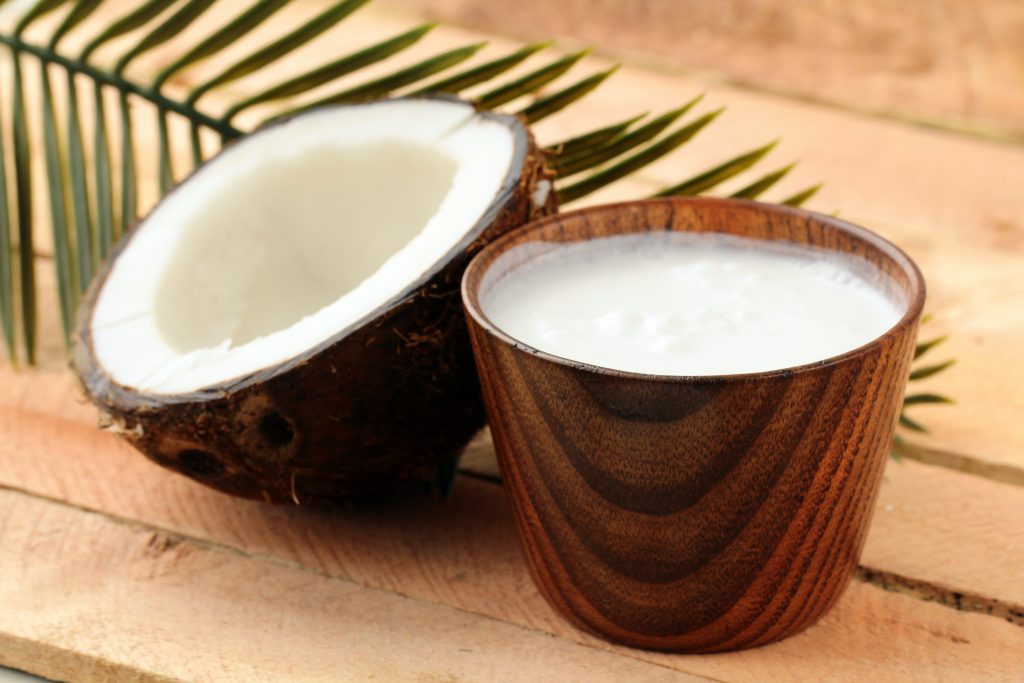
Imagine swaying palm trees, sun-drenched beaches, and the gentle lapping of ocean waves. This is the ancestral home of the coconut. Coconut milk, often confused with coconut water (the clear liquid found inside young coconuts), is a much richer, creamier substance derived from the grated flesh of mature coconuts.
The process is remarkably simple, yet yields a product of profound versatility. The mature coconut meat is grated, then steeped in hot water. As it cools, the mixture is pressed, extracting a milky white liquid – this is coconut milk. The first pressing, often referred to as "thick" or "cream," is rich and opulent, bursting with flavor and fat. Subsequent pressings, using the same grated flesh with more water, yield "thin" milk, which is lighter in consistency and lower in fat.
Historically, coconut milk has been a cornerstone of Southeast Asian, Indian, Caribbean, and South American cuisines for centuries. It’s not just a beverage; it’s an ingredient that lends its distinctive richness and subtle sweetness to curries, stews, soups, and desserts. Its cultural significance runs deep, intertwined with traditional medicine and daily sustenance.
In the modern context, coconut milk is primarily found in two forms: canned and carton. Canned coconut milk, often full-fat, is typically reserved for cooking due to its richness and the natural separation of cream and water. Carton varieties, on the other hand, are often diluted, fortified, and stabilized, designed for drinking, cereals, and coffee. They are frequently labeled "light" or "beverage" coconut milk, signifying a significant reduction in fat and calories compared to their canned counterparts. This distinction is crucial when we delve into their nutritional profiles.
The Californian Dream: Almond Milk
Now, shift your gaze from the tropics to the sun-drenched orchards of California, the world’s leading producer of almonds. Almond milk, while having ancient roots in medieval Europe as a fasting drink and a dairy substitute, truly surged into mainstream popularity in the 21st century as the poster child of the plant-based movement.
The creation of almond milk is a more industrialized process than its coconut counterpart, though it can also be made simply at home. Commercial almond milk is typically produced by soaking shelled almonds in water, then blending them thoroughly until they form a fine slurry. This mixture is then strained through a fine mesh cloth (like cheesecloth or a nut milk bag) to separate the liquid from the almond pulp (known as almond meal or okara).
The resulting liquid is a pale, milky beverage with a subtly nutty flavor. Crucially, commercial almond milk often undergoes further processing. It is frequently fortified with vitamins and minerals like calcium, vitamin D, and vitamin B12 to mimic the nutritional profile of dairy milk. Thickeners, emulsifiers (such as carrageenan, gellan gum, or sunflower lecithin), and sweeteners are also commonly added to improve texture, stability, and taste. Unsweetened versions, thankfully, avoid the added sugars.
Almond milk’s rise to fame is intrinsically linked to its versatility and mild flavor profile. It doesn’t overpower, making it an ideal companion for cereals, coffee, smoothies, and baking, where a neutral, creamy base is desired. Its low-calorie count, particularly in unsweetened varieties, also cemented its status as a go-to for those watching their waistlines.
Our journey begins, then, with these two distinct origins: one, a tropical staple deeply woven into the fabric of traditional cuisines; the other, a modern marvel of food science, optimized for convenience and contemporary dietary preferences. These origins already hint at the divergent paths their nutritional stories will take.
Chapter 2: The Nutritional Showdown – A Deep Dive into Macronutrients and Micronutrients
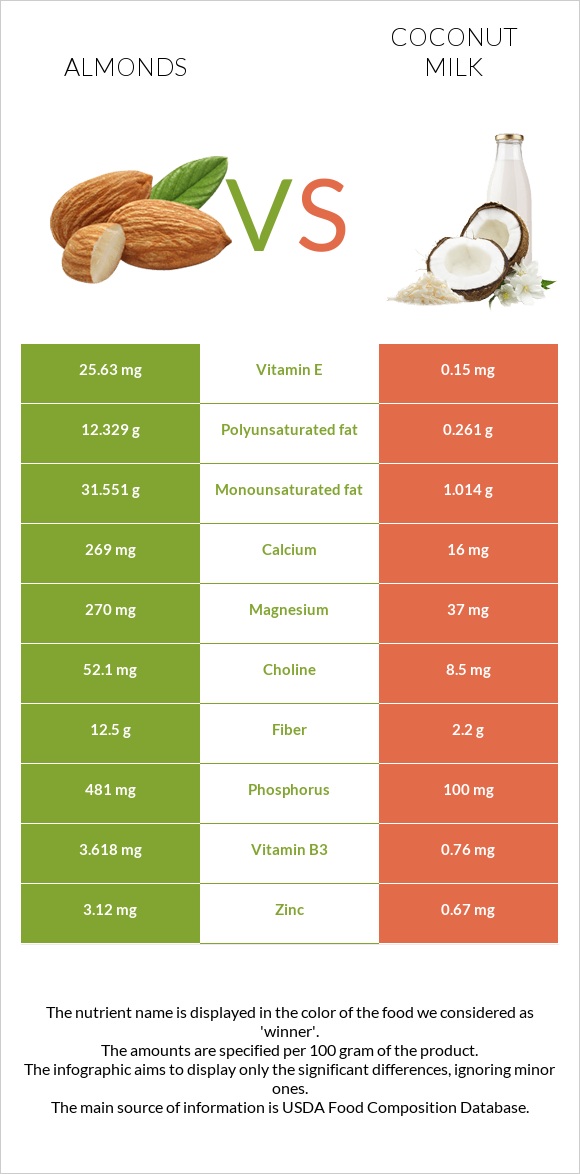
Here is where the rubber meets the road, or perhaps, where the almond meets the coconut. A direct nutritional comparison reveals the stark differences and subtle nuances that define these two popular alternatives. For clarity, we will primarily compare the unsweetened carton varieties of both, as these are the most common for direct consumption and offer the purest nutritional comparison, free from added sugars. We will, however, touch upon the full-fat coconut milk used in cooking.
Calories: The Energy Quotient
- Almond Milk (Unsweetened): This is where almond milk truly shines for those managing calorie intake. A single cup (240ml) typically contains a remarkably low 30-40 calories. This makes it one of the lowest-calorie milk alternatives available, often significantly less than skim dairy milk.
- Coconut Milk (Unsweetened, Carton): While lighter than its canned cousin, carton coconut milk still registers higher on the calorie scale than almond milk. A cup usually provides around 45-50 calories.
- Coconut Milk (Full-Fat, Canned): This is a completely different beast. A cup of full-fat canned coconut milk can easily soar to 400-500 calories, reflecting its dense fat content. It’s crucial not to confuse this with the beverage-style coconut milk.
The Story Here: For weight management and general calorie restriction, unsweetened almond milk offers a clear advantage. Its minimal caloric contribution allows for greater flexibility in other dietary choices throughout the day.
Fats: A Tale of Saturation and Unsaturation
The fat content and type are perhaps the most significant differentiators between our two contenders, and a point of considerable debate.
- Almond Milk: Predominantly composed of healthy, unsaturated fats. A cup contains about 2.5-3 grams of fat, most of which are monounsaturated and polyunsaturated fats. These are the "good fats" known for their heart-protective properties, helping to lower LDL (bad) cholesterol and raise HDL (good) cholesterol. Almonds are also a source of omega-6 fatty acids, and while essential, the balance with omega-3s is a broader dietary consideration.
- Coconut Milk: This is where the narrative becomes complex. Carton coconut milk contains around 4-5 grams of fat per cup, a notable portion of which is saturated fat. Full-fat canned coconut milk is extremely high in saturated fat, often 40-50 grams per cup. However, the saturated fat in coconut milk is unique, consisting largely of Medium-Chain Triglycerides (MCTs), particularly lauric acid.



Post Comment