Guava vs. Orange: Which One Actually Wins the Vitamin C Crown? A Tale of Two Fruits and a Quest for Nutritional Supremacy
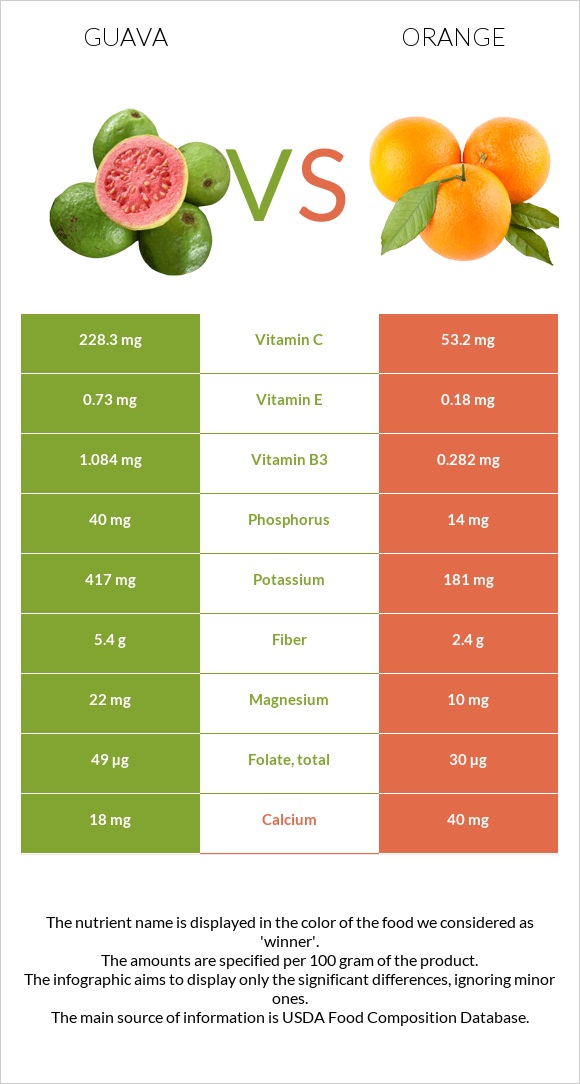
In the vibrant tapestry of global nutrition, few nutrients command as much reverence and popular recognition as Vitamin C. Ascorbic acid, as it’s scientifically known, is a titan among vitamins, celebrated for its immune-boosting prowess, its role in collagen synthesis, and its potent antioxidant capabilities. For decades, one fruit has worn the Vitamin C crown with undisputed authority: the humble, yet mighty, orange. Its juicy segments and zesty aroma have become synonymous with health, vitality, and a robust defense against sniffles and scurvy alike.
But what if the king has been ruling unchallenged for too long? What if, lurking in the shadows of tropical groves, an unassuming contender possesses a secret weapon, a nutritional payload that could usurp the orange’s long-held throne? This is the story of the guava, an often-overlooked fruit, and its surprising, yet compelling, challenge for the coveted Vitamin C crown.
This isn’t merely a numerical comparison; it’s a narrative woven through history, cultural significance, nutritional science, and the very human quest for optimal health. For the knowledgeable connoisseur of well-being, this exploration will peel back layers of common perception to reveal a richer, more nuanced truth about these two extraordinary fruits.
The Legend of Vitamin C: A Historical Overture
To truly appreciate the contenders, we must first understand the significance of the prize. The story of Vitamin C is one of humanity’s most dramatic nutritional discoveries, born from centuries of suffering and a persistent spirit of scientific inquiry.
For hundreds of years, the scourge of scurvy haunted sailors, explorers, and anyone deprived of fresh produce for extended periods. This debilitating disease, characterized by bleeding gums, skin hemorrhages, extreme fatigue, and eventually death, decimated crews on long voyages, claiming more lives than storms, shipwrecks, and battles combined. From Vasco da Gama’s circumnavigation to Magellan’s ill-fated journey, scurvy was a silent, insidious killer.
It wasn’t until the mid-18th century that a Scottish naval surgeon named James Lind conducted one of the first controlled clinical trials in history. In 1747, aboard HMS Salisbury, Lind famously divided 12 scurvy-afflicted sailors into pairs, each receiving a different dietary supplement. Those who consumed oranges and lemons showed dramatic improvement, while others did not. Lind’s findings, though initially met with skepticism, laid the groundwork for understanding the link between diet and disease. It would take another century and a half for scientists to isolate the specific compound responsible, which was finally identified as ascorbic acid in the 1930s.
From a mysterious "anti-scurvy factor" to a clearly defined biochemical powerhouse, Vitamin C’s journey has been transformative. Today, we know it’s not just a cure for a historical ailment but an essential nutrient involved in over 300 metabolic functions. It acts as a primary water-soluble antioxidant, neutralizing free radicals that can damage cells and contribute to chronic diseases. It is indispensable for the synthesis of collagen, the main structural protein in connective tissues, making it vital for healthy skin, bones, tendons, and blood vessels. Furthermore, Vitamin C plays a crucial role in immune function, enhancing the activity of white blood cells and modulating inflammatory responses. It also aids in the absorption of non-heme iron, an important consideration for vegetarians and vegans.
This rich history underscores why the "Vitamin C crown" is such a coveted symbol. It represents not just a nutrient, but a legacy of discovery, a beacon of health, and a testament to the profound impact of diet on human well-being.
Meet the Contenders: A Tale of Two Origins
Before we pit them against each other in a direct nutritional showdown, let’s get to know our contestants better. Each fruit carries its own unique history, cultural significance, and complex nutritional profile beyond just Vitamin C.
The Orange: The Citrus Saga and the Reigning Monarch
The orange, Citrus sinensis, is arguably the most recognized citrus fruit globally. Its journey from obscurity to ubiquity is a fascinating saga. Originating in a region encompassing southern China, northeast India, and Myanmar, oranges were cultivated for millennia before making their way westward. Arab traders introduced them to the Middle East and North Africa, and by the 15th century, Portuguese explorers brought them to Europe, particularly to the Mediterranean basin, where the climate proved ideal for their cultivation. Columbus carried orange seeds to the New World, planting them in Hispaniola, from where they spread throughout the Americas.
Today, oranges are grown in tropical and subtropical regions worldwide, with Brazil, the United States (Florida and California), China, and India being major producers. Their global dominance is not just due to their adaptability but also their incredible versatility and appeal.
Beyond the C-Claim: While renowned for Vitamin C, the orange offers a cornucopia of other beneficial compounds:
- Bioflavonoids: Hesperidin and naringenin are powerful antioxidants found abundantly in oranges, particularly in the white pith and membranes. These compounds work synergistically with Vitamin C, enhancing its absorption and antioxidant activity. Hesperidin, in particular, has been studied for its potential to improve blood vessel function and reduce inflammation.
- Dietary Fiber: Especially when consumed whole, oranges provide significant amounts of soluble and insoluble fiber, aiding digestion, promoting satiety, and helping to regulate blood sugar and cholesterol levels.
- Other Vitamins and Minerals: Oranges contribute folate (important for cell division and DNA synthesis), thiamine (Vitamin B1), and potassium (essential for blood pressure regulation and nerve function).
- Carotenoids: Though less prominent than in some other fruits, oranges contain beta-cryptoxanthin and beta-carotene, which are precursors to Vitamin A, supporting vision and immune health.
The orange’s reputation as the "Vitamin C King" is deeply ingrained in public consciousness, fueled by decades of marketing, its widespread availability, and the pervasive culture of orange juice consumption. It’s the go-to fruit for a quick Vitamin C boost, a staple in breakfast routines, and a familiar symbol of healthy living.
The Guava: The Tropical Enigma and the Underdog Challenger
The guava, Psidium guajava, stands in stark contrast to the orange’s global celebrity. Often regarded as an exotic fruit in many Western countries, the guava boasts an equally rich, albeit less widely known, history. Native to Central and South America, particularly southern Mexico and the Andean regions, it has been cultivated for thousands of years. Indigenous populations revered it not only for its sweet and tangy flavor but also for its medicinal properties. Spanish and Portuguese colonizers were instrumental in spreading guava seeds across their colonial empires, introducing it to Asia, Africa, and other tropical regions, where it quickly naturalized and became a local favorite.
Today, India, Indonesia, China, and Pakistan are among the largest producers, with its cultivation expanding in parts of the Caribbean and Florida. Guavas come in various forms – common guava, strawberry guava, pineapple guava – with flesh colors ranging from white to yellow to deep pink, each offering subtle variations in flavor and nutrient profile.
Beyond the C-Claim: The guava is a nutritional powerhouse in its own right, often surpassing more famous fruits in several categories:
- Dietary Fiber: Guavas are exceptionally rich in fiber, often containing more than oranges, apples, or bananas. This contributes significantly to digestive health, weight management, and blood sugar control.
- Lycopene: Pink-fleshed guavas are one of the richest sources of lycopene, a powerful carotenoid antioxidant usually associated with tomatoes and watermelon. Lycopene is extensively studied for its potential role in reducing the risk of certain cancers (especially prostate cancer) and protecting against heart disease.


Post Comment