Glycemic Index Deep Dive: Is Maple Syrup Actually Better for Your Blood Sugar?
In the vast and often perplexing landscape of nutritional advice, certain foods attain an almost mythical status, whispered about as "healthier alternatives" to their more villainous counterparts. Maple syrup, with its rustic charm, natural origins, and distinctive flavour, has long enjoyed such a position. Many health-conscious consumers instinctively reach for it, convinced it offers a superior choice over granulated white sugar, honey, or high-fructose corn syrup, particularly when it comes to managing blood sugar levels. But is this perception rooted in scientific fact, or is it merely a sweet illusion spun by clever marketing and a desire for simpler, more "natural" answers?
This article embarks on a deep dive into the glycemic index, fructose metabolism, and the nuanced composition of maple syrup, seeking to unravel the truth behind its blood sugar reputation. Our journey will not only dissect the scientific literature but also challenge common assumptions, offering a comprehensive and balanced perspective for the discerning, knowledgeable reader. Prepare to go beyond the surface and discover whether your favourite pancake topper truly holds the key to better glycemic control, or if the story is, as often is the case in nutrition, far more complex.
The Glycemic Index: A Foundation for Understanding
To properly evaluate maple syrup’s impact, we must first firmly grasp the concept of the Glycemic Index (GI). Developed in the early 1980s by Dr. David Jenkins and colleagues at the University of Toronto, the GI is a ranking system for carbohydrate-containing foods based on their immediate effect on blood glucose levels. Foods are tested by measuring the rise in blood glucose two hours after consumption, compared to a reference food (typically pure glucose or white bread), which is assigned a GI value of 100.
- High GI foods (70 or more): Cause a rapid and significant rise in blood sugar, followed by a sharp drop. Examples include white bread, refined cereals, and many sugary drinks.
- Medium GI foods (56-69): Lead to a moderate rise in blood sugar. Examples include whole wheat bread, brown rice, and ripe bananas.
- Low GI foods (55 or less): Result in a slow, gradual rise in blood sugar, promoting a more sustained energy release and better satiety. Examples include most vegetables, legumes, and whole fruits.
The premise behind advocating for low-GI diets is compelling: by choosing foods that elicit a gentler blood sugar response, we can theoretically reduce the demand on the pancreas to produce insulin, potentially improving insulin sensitivity over time, reducing the risk of type 2 diabetes, and aiding in weight management. However, the GI is not without its limitations, which a knowledgeable audience must appreciate.
Firstly, the GI is measured for individual foods in isolation. In reality, we rarely eat foods in a vacuum. The presence of fat, protein, and fibre in a meal can dramatically alter the overall glycemic response. For instance, adding nuts (fat, protein, fibre) to a banana (medium GI) will lower the overall GI of that snack. Secondly, preparation methods matter: an al dente pasta will have a lower GI than overcooked pasta. Thirdly, individual responses can vary significantly due due to factors like gut microbiome composition, genetics, and activity levels.
This leads us to the crucial distinction between the Glycemic Index (GI) and the Glycemic Load (GL). While GI measures the quality of carbohydrate (how quickly it raises blood sugar), GL accounts for both the quality and the quantity of carbohydrate in a typical serving. The formula for GL is (GI x grams of carbohydrate) / 100. A high-GI food consumed in a very small portion might have a low GL, whereas a moderate-GI food consumed in a very large portion could have a high GL. For example, watermelon has a high GI (around 76), but because it’s mostly water and relatively low in carbohydrates per serving, its GL is low (around 4 per 120g serving). This distinction is paramount when evaluating sweeteners, as even a "better" sweetener consumed in excess will inevitably lead to a substantial sugar load.
The Sweetener Landscape: Glucose, Fructose, and Sucrose
Before focusing on maple syrup, let’s briefly review the primary sugars that constitute most sweeteners, as their individual metabolic fates are key to understanding their impact on blood sugar.
- Glucose: This is the body’s preferred and primary source of energy. When glucose enters the bloodstream, it triggers the release of insulin from the pancreas, which helps transport glucose into cells for immediate use or storage as glycogen in the liver and muscles. A rapid influx of glucose leads to a rapid insulin response.
- Fructose: Often called "fruit sugar," fructose is metabolized primarily in the liver. Unlike glucose, fructose does not directly stimulate insulin secretion. This fact led to initial excitement that fructose might be a "healthier" sugar for diabetics. However, excessive fructose intake can lead to a cascade of metabolic issues, including increased de novo lipogenesis (conversion of carbohydrates to fat) in the liver, potentially contributing to non-alcoholic fatty liver disease (NAFLD), elevated triglycerides, and insulin resistance over time.
- Sucrose: Commonly known as table sugar, sucrose is a disaccharide composed of one molecule of glucose and one molecule of fructose, chemically bonded together. When consumed, enzymes in the small intestine quickly break this bond, releasing equal amounts of free glucose and fructose into the bloodstream.
Most common caloric sweeteners are combinations of these monosaccharides or are sucrose itself. White sugar is pure sucrose. High-Fructose Corn Syrup (HFCS) comes in various formulations, typically 42% or 55% fructose (the rest being glucose), making its composition similar to sucrose in many ways. Honey is a complex mixture, generally around 30-40% glucose and 35-45% fructose, along with water, pollen, enzymes, and a small amount of sucrose. Agave nectar stands out for its very high fructose content, often 70-90%, with the remainder being glucose.
Maple Syrup Under the Microscope: Composition and Claims
Maple syrup is the concentrated sap of sugar maple trees. Its production is a labour-intensive process involving tapping trees, collecting sap, and boiling it down to evaporate water, leaving behind the viscous, amber liquid we know and love. This minimal processing is often cited as a key differentiator.
Chemical Composition:
The primary sugar in maple syrup is sucrose, making up roughly 60-70% of its total weight. This means that, like table sugar, it breaks down into roughly equal parts glucose and fructose upon digestion. Beyond its sugar content, maple syrup contains approximately 30-40% water, along with trace amounts of minerals and a unique array of bioactive compounds.
Glycemic Index of Maple Syrup:
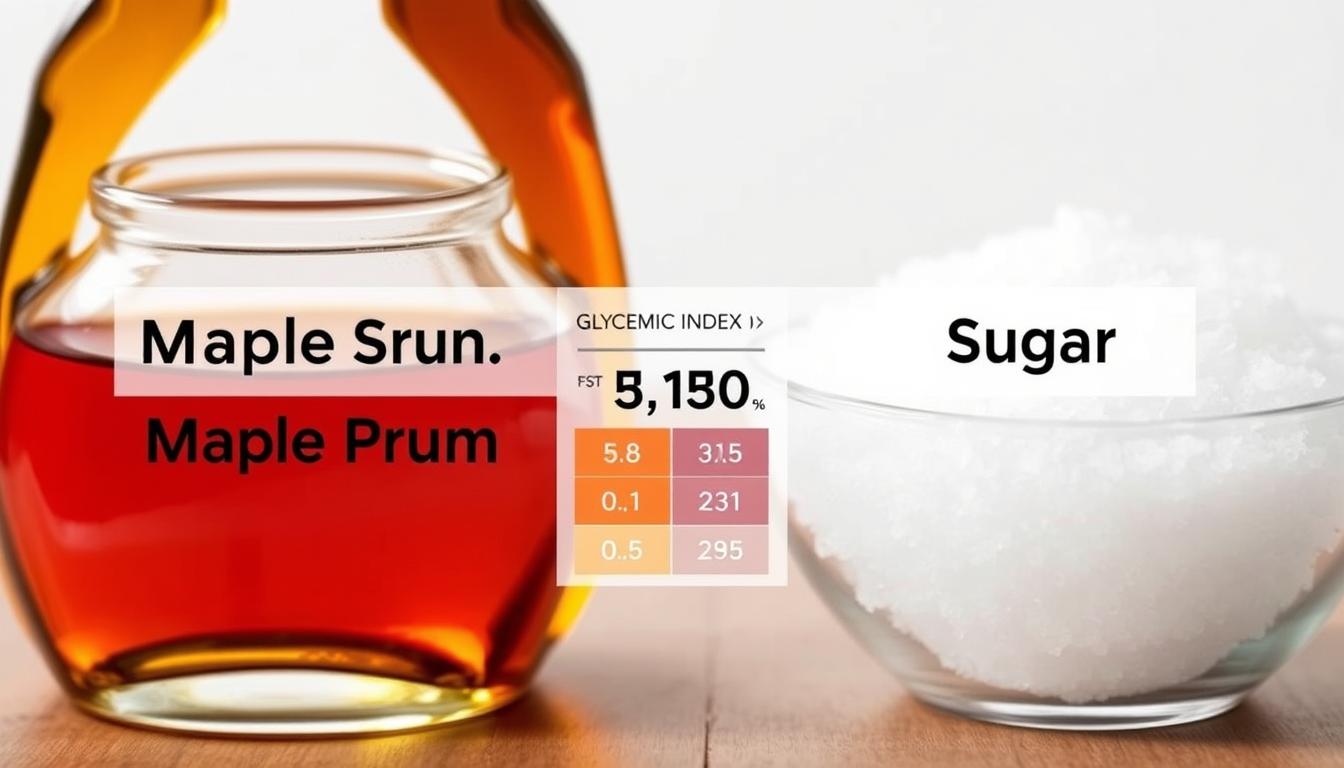
Multiple studies have attempted to determine the GI of pure maple syrup. While values can vary slightly depending on the grade of syrup and methodology, most research places maple syrup in the medium GI category, typically ranging from 54 to 60.
Let’s compare this to other common sweeteners:
- Glucose: 100 (by definition)


Post Comment