The Emerald Sentinel: Unveiling Matcha’s Antioxidant Dominion in the Superfood Pantheon
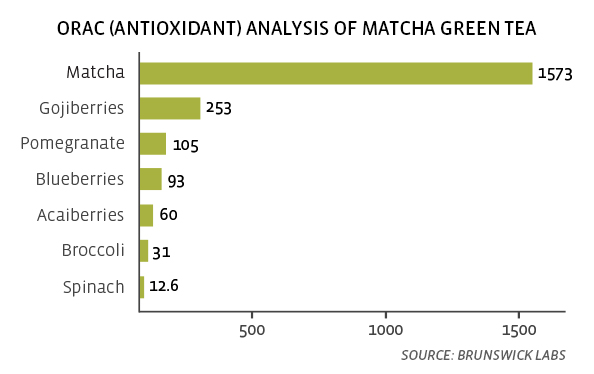
In the relentless quest for vitality and longevity, humanity has perennially sought elixirs, botanicals, and dietary powerhouses capable of staving off the ravages of time and disease. From ancient herbal traditions to modern nutritional science, the spotlight frequently falls upon antioxidants – molecular guardians that combat oxidative stress, a primary driver of aging and chronic illness. Within this vibrant landscape of health-promoting compounds, a venerable green powder, steeped in centuries of Japanese tradition, has emerged not merely as a delightful beverage but as an antioxidant titan: Matcha.
More than just a tea, Matcha is a concentrated embodiment of nature’s protective wisdom, a vibrant emerald elixir that promises not just a caffeine boost but a profound cellular defense. Its whispered reputation as a superfood is increasingly affirmed by scientific scrutiny, particularly when its Oxygen Radical Absorbance Capacity (ORAC) score is brought into sharp focus. The ORAC score, while not without its nuances and limitations, offers a quantifiable metric for assessing a food’s antioxidant potential, acting as a crucial compass in the vast ocean of nutritional choices. This article embarks on a journey to dissect Matcha’s extraordinary antioxidant profile, comparing its formidable ORAC score to an array of renowned superfoods, and ultimately telling the story of why this finely ground tea leaf holds a unique, almost regal, position in the realm of dietary wellness.
The ORAC Compass: Navigating the World of Antioxidants
Before delving into the specific prowess of Matcha, it’s essential to understand the metric by which its power is often measured: the ORAC score. Developed by scientists at the National Institute on Aging (NIA) at the National Institutes of Health (NIH), the ORAC assay is a laboratory test that measures the total antioxidant capacity of foods and other chemical substances. In essence, it quantifies a substance’s ability to neutralize free radicals – unstable molecules that can damage cells, proteins, and DNA, leading to inflammation, aging, and a host of degenerative diseases.
The principle behind the ORAC test is straightforward: a sample of the food or substance is introduced to a mixture containing a free radical generator and a fluorescent probe. As the free radicals attack the probe, its fluorescence diminishes. If antioxidants are present in the sample, they neutralize the free radicals, thereby protecting the probe and maintaining its fluorescence. The higher the ORAC score, the greater the antioxidant capacity of the food.
For a knowledgeable audience, it’s crucial to acknowledge the scientific context and limitations of ORAC. While initially hailed as a definitive measure, the U.S. Department of Agriculture (USDA) removed its ORAC database in 2012, citing concerns that the scores were being misinterpreted and overemphasized by consumers and marketers. The primary critiques included:
- In Vitro vs. In Vivo: ORAC is an in vitro (test tube) assay. It measures a substance’s antioxidant capacity outside the complex biological system of the human body. How these antioxidants are absorbed, metabolized, and utilized in vivo can vary greatly. Bioavailability, the extent to which a nutrient can be absorbed and used by the body, is a critical factor that ORAC doesn’t directly measure.
- Specific Radical Types: The ORAC assay primarily measures the capacity against peroxyl radicals, which are just one type of free radical found in the body. Other assays, like the Total Antioxidant Capacity (TAC) or Ferric Reducing Antioxidant Power (FRAP) assay, measure different types of radical scavenging or reducing power.
- Holistic Synergy: Foods contain thousands of bioactive compounds that can act synergistically. Isolating one score might oversimplify the complex interplay of nutrients within a whole food. The health benefits of fruits, vegetables, and other superfoods extend far beyond their antioxidant capacity, encompassing vitamins, minerals, fiber, and other phytonutrients.
Despite these caveats, the ORAC score remains a useful comparative tool, offering a snapshot of a food’s potential to combat oxidative stress under specific laboratory conditions. It provides a common language for discussing and comparing the relative antioxidant richness of various foods, guiding consumers towards nutrient-dense choices. When viewed through this lens – as an indicator of potential rather than a definitive statement of in vivo efficacy – ORAC allows us to appreciate the extraordinary concentration of protective compounds within certain foods, and Matcha stands as a prime example.
Matcha: The Emerald Elixir Unveiled
The story of Matcha is one woven into the rich tapestry of Japanese culture, spirituality, and meticulous craftsmanship. Originating in China during the Tang Dynasty (618-907 AD) and later refined and revered in Japan, Matcha is not merely green tea; it is the essence of the tea leaf, pulverized into a fine, vibrant powder. Its unique cultivation and processing methods are what unlock its unparalleled nutritional and antioxidant density.
Cultivation and Processing:
Matcha’s journey begins weeks before harvest, when tea bushes (Camellia sinensis) are shaded from direct sunlight. This crucial step, known as ōishita en, triggers a cascade of physiological changes in the tea plant. The lack of sunlight forces the plant to produce higher levels of chlorophyll, giving Matcha its characteristic brilliant green hue. More importantly, it dramatically increases the production of amino acids, particularly L-theanine, which contributes to Matcha’s unique umami flavor profile and calming effects, and catechins, the powerful antioxidants.
Once harvested, the tender leaves are steamed to prevent oxidation (a process that turns green tea into black tea), then air-dried. The veins and stems are removed, leaving only the purest leaf flesh, known as tencha. This tencha is then meticulously stone-ground into a fine powder – Matcha. The entire leaf is consumed, unlike traditional steeped teas where the leaves are discarded. This fundamental difference is key to understanding Matcha’s exceptional potency.
The Antioxidant Core: Catechins, Especially EGCG:
The primary drivers of Matcha’s antioxidant power are a group of polyphenols known as catechins. While green tea, in general, is rich in catechins, Matcha contains them in significantly higher concentrations. The most abundant and potent catechin in Matcha is epigallocatechin gallate (EGCG). EGCG is a powerhouse antioxidant, studied extensively for its potential roles in cardiovascular health, metabolic regulation, anti-inflammatory effects, and even its chemopreventive properties.
Because the entire tea leaf is consumed when drinking Matcha, you ingest all of its beneficial compounds, not just those that are water-soluble. This includes not only a higher concentration of catechins but also chlorophyll, vitamins (A, C, E, K), minerals, and dietary fiber, all contributing to its holistic nutritional profile. The L-theanine, unique to tea, works synergistically with caffeine to provide a sustained, focused energy without the jitters, further enhancing Matcha’s appeal as a daily wellness ritual.
The ORAC Showdown: Matcha vs. The Superfood Pantheon
Now, let’s turn to the heart of the matter: comparing Matcha’s ORAC score to other esteemed superfoods. While exact ORAC values can vary based on growing conditions, processing, and testing methodologies, general ranges provide a valuable comparative landscape. A standard serving of Matcha (typically 1-2 grams, or about ½ to 1 teaspoon) can boast an ORAC score that dwarfs many other nutrient-dense foods.
To put this into perspective, the USDA previously recommended an ORAC intake of 3,000-5,000 units per day for optimal health. A single gram of high-quality Matcha can provide upwards of 1,384 ORAC units. If one consumes a standard serving of 2 grams, that’s already 2,768 ORAC units, nearly meeting the lower end of the daily recommendation with just one small beverage.
Let’s stack Matcha against some of the most celebrated superfoods:
1. Berries – Nature’s Candy, Antioxidant Richness:
Berries are consistently lauded for their high antioxidant content, primarily due to anthocyanins, flavonoids, and vitamin C.
- Açai Berry: Often touted as the "king of superfoods," açai pulp (freeze-dried powder) can have an ORAC score ranging from 1,000 to 1,500 units per gram. While impressive, a single gram of Matcha often rivals or exceeds this.
- Blueberries: A classic superfood, blueberries typically register around 9,000-10,000 ORAC units per 100 grams (about half a cup). This translates to approximately 90-100 ORAC units per gram. Matcha, gram for gram, is significantly more potent.


Post Comment