Why Keeping Fresh Flowers Improves Daily Mental Clarity: A Bloom of Understanding
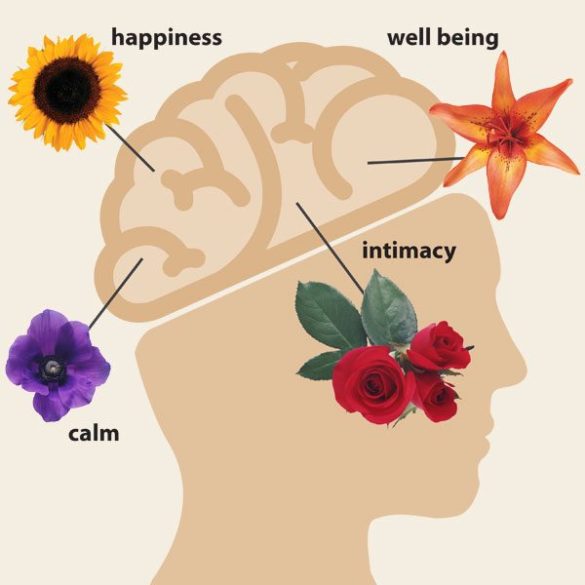
There’s a quiet revolution happening on kitchen counters and office desks across the world, one fragrant petal at a time. It’s a revolution not of grand gestures or technological marvels, but of gentle, consistent beauty: the presence of fresh flowers. For centuries, flowers have been symbols – of love, mourning, celebration, and devotion. Yet, beyond their symbolic weight and undeniable aesthetic appeal, lies a profound, often underestimated power: their capacity to significantly enhance daily mental clarity. This isn’t just about making a space prettier; it’s about fundamentally altering our cognitive and emotional landscape, inviting a sharper focus, a calmer mind, and a deeper connection to the present moment.
To understand this transformative power, we must embark on a journey that transcends mere decoration, delving into our evolutionary heritage, the intricate workings of our sensory systems, the nuanced landscape of psychology, and the practical rituals that weave flowers into the fabric of our daily lives. It’s a story of rediscovery, a narrative that explains why these ephemeral wonders are, in fact, enduring anchors for our mental well-being.
The Primal Whisper: Our Evolutionary Bond with Flora
Our connection to flowers is not a recent cultural construct; it’s etched deep within our evolutionary blueprint. E.O. Wilson’s Biophilia Hypothesis posits that humans possess an innate tendency to connect with nature and other living systems. For our hunter-gatherer ancestors, the ability to discern and interpret the natural world was a matter of survival. Lush greenery signaled water and fertile ground; vibrant blooms could indicate the presence of edible fruits, medicinal herbs, or even warn of poisonous plants. The world was read through its flora, and those who were most attuned to these signals thrived.
In this ancient narrative, flowers were not merely beautiful; they were vital signposts. They represented life, growth, the promise of sustenance, and the cyclical rhythm of nature. This deep-seated appreciation for the natural world, and specifically for its blossoming expressions, became hardwired into our collective consciousness. Fast forward to the hyper-urbanized, digitally saturated existence of the 21st century, and this primal connection often lies dormant, starved of its natural stimuli. Our brains, however, still yearn for that biophilic engagement.
Fresh flowers act as a direct, accessible bridge to this ancient wisdom. They are miniature ecosystems, vibrant reminders of the outside world brought indoors. Their very presence subtly reassures our primal brain that all is well, that life is flourishing, and that we are connected to something larger and more enduring than the four walls around us. This fundamental reassurance is the bedrock upon which mental clarity can begin to blossom, quieting the underlying anxieties of a disconnected modern life.
The Multi-Sensory Symphony: Engaging Mind and Spirit
The impact of fresh flowers is never singular; it is a multi-sensory experience that orchestrates a symphony of positive responses within us. Each sense plays a crucial role in enhancing mental clarity.
The Visual Feast: Color, Form, and Fractal Beauty
The most immediate impact of flowers is visual. Their kaleidoscope of colors, intricate forms, and delicate textures instantly capture our attention. Color psychology offers significant insights here. Greens, abundant in foliage, are universally recognized for promoting feelings of calm, balance, and refreshment, subtly reducing mental fatigue. Blues, found in hydrangeas or delphiniums, evoke tranquility and contemplation, ideal for fostering focused thought. Yellows, like sunflowers or daffodils, are associated with optimism, energy, and creativity, acting as natural mood lifters. Reds, vibrant and passionate, can stimulate energy and attention, though in moderation, to avoid overstimulation.
Beyond color, the form and structure of flowers offer a fascinating cognitive engagement. The intricate patterns, the symmetry of petals, or the delicate asymmetry of a wild arrangement, mimic the fractal patterns found throughout nature. Research suggests that viewing fractals, which are repetitive patterns that appear similar at different scales, can induce a relaxed yet alert state, reducing physiological stress and improving cognitive performance. Our brains are hardwired to find beauty and order in these natural geometries, and the act of observing them provides a gentle, soft fascination that allows our minds to wander productively without becoming overwhelmed. This "soft fascination," as defined by Attention Restoration Theory, is crucial for restoring directed attention and reducing mental fatigue.
The Olfactory Overture: Scent and the Limbic Connection
Perhaps the most potent, yet often unconscious, influence of flowers comes through their scent. The human sense of smell is uniquely powerful, bypassing the rational processing centers of the brain and directly accessing the limbic system, the ancient part of our brain responsible for emotion, memory, and motivation. This is why a particular scent can instantly transport us back to a childhood memory or evoke a powerful emotional response.
The natural fragrances emitted by fresh flowers are complex chemical cocktails, far more nuanced and subtle than synthetic perfumes. Lavender, for instance, is renowned for its anxiolytic (anxiety-reducing) properties, promoting relaxation and improving sleep quality – foundational elements for clear thinking. The sweet, comforting scent of roses has been linked to reduced stress and enhanced mood. Citrus notes, found in some blossoms or accompanying foliage, can be uplifting and invigorating, sharpening alertness.
The consistent, gentle presence of these natural aromas creates an ambient aromatherapy in our living and working spaces. This isn’t a jarring burst of fragrance, but a subtle, pervasive undertone that constantly nudges our limbic system towards states conducive to clarity: calm, contentment, and a gentle sense of well-being. By engaging this primal sensory pathway, flowers help to quiet the mental chatter and emotional turbulence that so often obstruct clear thought.
The Subtler Senses: Touch and Audition
While less dominant, the tactile and even auditory aspects contribute to the holistic experience. The act of gently touching a petal, feeling its velvet texture or delicate resilience, grounds us in the present moment. The subtle rustle of leaves as a breeze passes through an open window, or the faint sounds of water being changed, further connects us to the living presence of the flowers. These micro-interactions, often subconscious, reinforce our connection to the natural world and enhance our overall sense of presence and calm.
Psychological & Emotional Well-being: The Direct Impact on Mood and Stress
Beyond sensory engagement, the psychological and emotional benefits of fresh flowers are profoundly impactful on mental clarity. A mind burdened by stress, anxiety, or low mood is inherently less clear, less focused, and less capable of optimal performance. Flowers act as powerful antidotes to these cognitive impediments.
Stress Reduction and Emotional Regulation
Numerous studies and anecdotal evidence highlight the stress-reducing capabilities of nature, and flowers are concentrated doses of nature. The mere act of gazing at a beautiful arrangement can lower blood pressure and heart rate, signaling to our nervous system that we are in a safe, pleasant environment. This physiological response is accompanied by a reduction in cortisol, the primary stress hormone. When cortisol levels are consistently high, it impairs cognitive functions like memory, attention, and problem-solving. By mitigating this stress response, flowers create the physiological conditions necessary for mental clarity.
Moreover, flowers are potent mood enhancers. Research, such as that conducted by Rutgers University, found that the presence of flowers triggers positive emotions, leading to increased feelings of life satisfaction and fostering greater social contact. Receiving or even simply observing flowers can stimulate the release of feel-good neurotransmitters like dopamine and serotonin, which are crucial for mood regulation, motivation, and overall psychological well-being. A happier, more emotionally balanced individual is naturally more capable of sustained focus and clear decision-making. They help to break the cycle of negative rumination, offering a gentle, aesthetically pleasing distraction that steers the mind towards more positive pathways.
Fostering Empathy and Connection
The presence of flowers has also been linked to increased prosocial behavior and empathy. They evoke feelings of compassion and generosity, encouraging us to connect more deeply with others and our surroundings. In a world often characterized by detachment and isolation, the subtle nudge towards connection can reduce feelings of loneliness, which are known to cloud judgment and impair cognitive function. By fostering a sense of belonging and positive interaction, flowers indirectly contribute to a more stable and clear mental state.
Cognitive Enhancement: Sharpening the Mind’s Edge
The most compelling argument for keeping fresh flowers lies in their demonstrable capacity to enhance specific cognitive functions, directly improving mental clarity.
Attention Restoration Theory (ART) and Soft Fascination
As touched upon earlier, the Attention Restoration Theory (ART), developed by environmental psychologists Rachel and Stephen Kaplan, provides a robust framework for understanding how nature restores our cognitive resources. Our modern lives demand constant directed attention – focusing on tasks, suppressing distractions, and making decisions. This type of attention is effortful and can lead to mental fatigue.
Nature, however, provides involuntary attention or "soft fascination." Think of watching clouds drift by, listening to a gentle rain, or observing the intricate patterns of a flower. These experiences capture our attention effortlessly, allowing our directed attention mechanisms to rest and recover. Fresh flowers, with their visual complexity, subtle fragrances, and living presence, are perfect examples of soft fascination. They offer a gentle, non-demanding stimulus that allows our minds to wander productively without becoming overwhelmed. This process of restoration is critical for improving focus, concentration, and the ability to think clearly. After spending time in a flower-adorned space, individuals often report feeling more alert, less fatigued, and better able to tackle demanding mental tasks.




Post Comment