The Biology of Bliss: Understanding the G-Spot’s Role in Female Pelvic Health
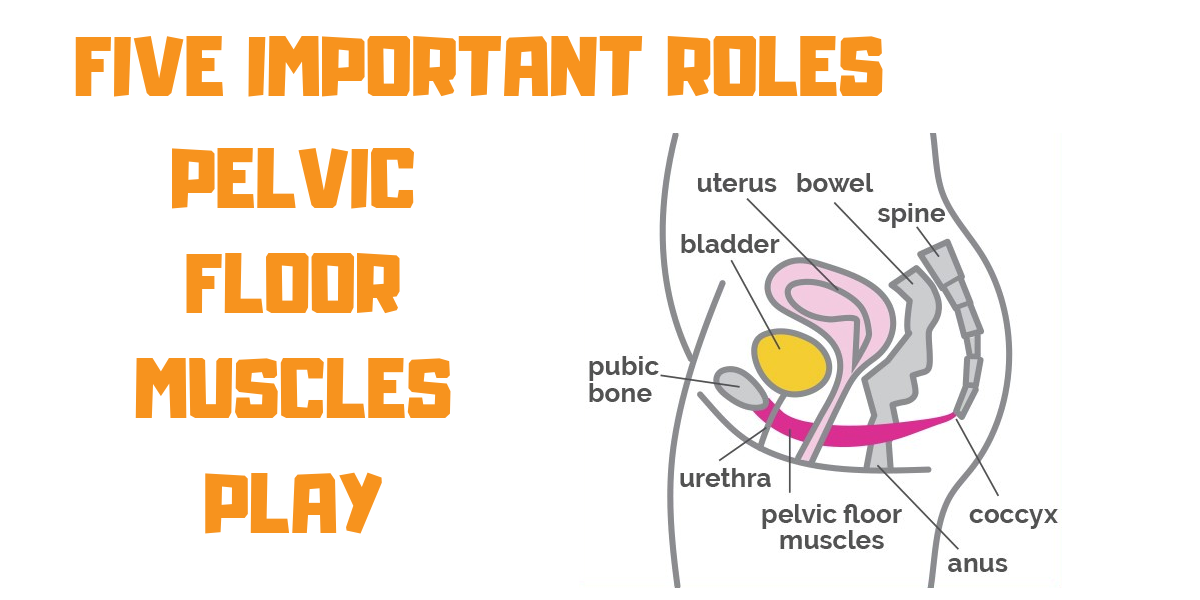
The landscape of female sexuality has long been shrouded in myth, misunderstanding, and a persistent focus on male-centric paradigms. For centuries, the complexities of women’s pleasure and the intricate anatomy underlying it remained largely unexplored or dismissed as secondary. Yet, nestled within this vibrant, often-underestimated topography, lies a region that has captivated scientific inquiry, fueled cultural debates, and promised profound experiences of bliss: the G-spot. Far from being a mere elusive button for pleasure, a deeper, more nuanced understanding reveals the G-spot as an integral component within a larger, interconnected system crucial not only for ecstatic sensation but for the holistic health and vitality of the female pelvis.
This is the story of that understanding – a journey from ancient whispers to modern neurobiological insights, exploring how this celebrated, sometimes controversial, area plays a fundamental role in female pelvic health, contributing to everything from urinary continence to psychological well-being. Our audience, knowledgeable and curious, seeks to move beyond sensationalism and into the rich tapestry of biological fact, appreciating the profound implications for women’s lives.
I. The Enduring Mystery: A Historical Tapestry
The concept of a specific, highly erogenous zone within the anterior vaginal wall is not a purely modern invention. Ancient texts, from Sanskrit erotic treatises to traditional Chinese medicine, subtly alluded to areas of heightened sensitivity in women’s intimate anatomy, suggesting an intuitive awareness of diverse pleasure points. However, it wasn’t until the 20th century that the "G-spot" began to crystallize as a distinct anatomical and physiological entity in Western medical discourse.
Our narrative truly begins in 1944, with the groundbreaking work of German gynecologist Ernst Gräfenberg. In a paper titled "The Role of Urethra in Female Orgasm," Gräfenberg described "an erotic zone" on the anterior wall of the vagina, behind the pubic bone along the course of the urethra, which, when stimulated, could lead to intense orgasms and even a phenomenon he termed "ejaculation." His observations, though revolutionary, were largely overlooked or dismissed by a medical establishment deeply entrenched in clitoral-focused models of female pleasure. The prevailing view held that the clitoris was the sole architect of female orgasm, reducing other potential sources of gratification to mere secondary sensations.
Decades later, in 1982, the work of Beverly Whipple, John Perry, and Alice Khan Ladas published "The G Spot and Other Discoveries About Human Sexuality," catapulted Gräfenberg’s findings into the public consciousness. They coined the term "G-spot" in his honor, igniting a fervent debate that continues to this day. The book became a sensation, empowering countless women to explore their bodies and challenging the monolithic narrative of female pleasure. However, it also sparked a scientific firestorm, with some researchers embracing the concept and others vehemently denying its existence as a discrete anatomical structure. This controversy, while at times frustrating, ultimately spurred further research, pushing the boundaries of anatomical and physiological exploration.
The historical journey of the G-spot is thus a testament to scientific curiosity battling cultural inertia, a story of an idea slowly gaining traction, challenging dogma, and forcing a re-evaluation of what we understand about female sexual anatomy and function. It underscores the critical importance of listening to women’s subjective experiences and pursuing objective scientific inquiry to validate or refute them.
II. Unraveling the Anatomy: More Than a Single Spot
One of the primary reasons for the enduring controversy surrounding the G-spot is the difficulty in definitively isolating it as a discrete, palpable anatomical structure, akin to an appendix or a specific gland. Early descriptions often painted it as a pea-sized or bean-shaped area, leading many women and their partners to search for an easily identifiable "button." This quest often led to frustration and doubt when such a singular entity couldn’t be found.
However, modern research, utilizing advanced imaging techniques, cadaver dissections, and neurophysiological studies, has revealed a more complex and fascinating reality. The "G-spot" is now understood not as a singular, isolated organ, but rather as a highly innervated, richly vascularized region within the anterior vaginal wall, intimately interconnected with several surrounding structures. This complex is often referred to as the Clitoro-Urethro-Vaginal (CUV) complex or the Urethral-Vaginal Complex (UVC).
Let’s dissect this complex:
-
The Urethra and Periurethral Tissue: The G-spot region lies directly adjacent to and often surrounds the urethra, the tube through which urine exits the body. The tissue surrounding the urethra, known as the periurethral tissue, is particularly dense and contains a network of nerves and blood vessels. Deep pressure and friction in this area are key to G-spot stimulation.
-
Skene’s Glands (Female Prostate): Embedded within the periurethral tissue are the Skene’s glands, also known as the paraurethral glands or, significantly, the "female prostate." These glands are homologous to the male prostate and are capable of secreting a fluid during sexual arousal and orgasm. This secretion is often associated with "female ejaculation," a phenomenon Gräfenberg himself observed. The Skene’s glands contain prostate-specific antigen (PSA), a marker typically associated with the male prostate, further cementing their homologous nature. Their engorgement during arousal contributes to the swelling and heightened sensitivity of the G-spot region.
-
Internal Clitoral Structures: Crucially, the G-spot region is not isolated from the clitoris. While the external clitoral glans is the most visible part, the clitoris is an extensive organ with internal structures that extend deep into the pelvis. These include the clitoral crura (roots) and vestibular bulbs, which engorge with blood during arousal and wrap around the urethra and vagina. Stimulation of the anterior vaginal wall, therefore, can indirectly stimulate these internal clitoral structures, explaining why G-spot orgasm often feels distinct but still deeply connected to clitoral sensation. The G-spot can be considered an extension of the internal clitoris, a concept that reconciles the historical debate between clitoral vs. vaginal orgasm.
-
Rich Nerve Endings: The G-spot region is characterized by an exceptionally high concentration of nerve endings, particularly branches of the pudendal nerve, which transmits sensory information from the genitals to the brain. These nerves are highly sensitive to pressure, touch, and vibration, making the area exquisitely responsive to direct or indirect stimulation. The density of these nerve fibers is a primary contributor to the intense sensations experienced.
-
Vascularity and Erectile Tissue: Like the clitoris, the G-spot region is rich in blood vessels and contains erectile tissue (corpus spongiosum-like tissue). During sexual arousal, this tissue engorges with blood, causing the area to swell, firm up, and become even more sensitive to touch. This tumescence is a physiological hallmark of arousal and plays a vital role in amplifying sensation.
Understanding the G-spot as a multi-component complex, rather than a single ‘spot,’ resolves much of the historical confusion. It explains why its exact location and sensation can vary significantly from woman to woman, and why some may perceive it more distinctly than others. It is an intricate biological nexus, a confluence of nerves, glands, and erectile tissue, all working in concert to create a unique and powerful sexual response.



Post Comment