The "Squirt" Debate: Unraveling the Mystery of Female Ejaculation and Its Profound Health Implications
For centuries, whispers and blushes have accompanied the phenomenon often referred to as "squirt." It’s been a myth, a marvel, a source of both profound pleasure and profound confusion. In the hushed annals of human sexuality, few topics have ignited as much fervent debate, scientific scrutiny, and personal revelation as female ejaculation. Far from being a mere footnote in the exploration of women’s pleasure, understanding this bodily function—or set of functions—is crucial for sexual health, empowerment, and dismantling persistent taboos. This article embarks on a journey to unravel the "squirt" debate, exploring its history, physiology, personal impact, and the multifaceted health implications for women worldwide.
A Whisper Through Time: The Historical Context
The notion that women can expel fluid during sexual arousal is not new. Ancient Indian texts, such as the Kama Sutra, subtly acknowledge female emissions, though their precise nature remains open to interpretation. In ancient Greece, Hippocrates himself spoke of "female semen," suggesting an early recognition of a fluid distinct from urine. Islamic scholars and physicians, notably Avicenna, also described female emissions, often linking them to conception and pleasure.
However, the Western world, particularly after the rise of Abrahamic religions, largely suppressed discussions of female sexual pleasure and bodily functions that didn’t directly serve procreation. Female orgasm itself became controversial, let alone the expulsion of fluid. What couldn’t be ignored was often pathologized, dismissed as incontinence, or relegated to the realm of folklore. This historical erasure set the stage for centuries of misunderstanding and shame, creating a void where scientific inquiry should have flourished.
It wasn’t until the late 20th century that the topic resurfaced with renewed vigor, propelled by the sexual revolution and a growing feminist movement that demanded a deeper understanding of female sexuality. Researchers like Dr. Beverly Whipple and Dr. John Perry, through their work on the G-spot and female ejaculation in the 1980s, brought the "squirt" phenomenon back into mainstream discussion, albeit amidst considerable skepticism.
Anatomy and Physiology: The Science Behind the Sensation
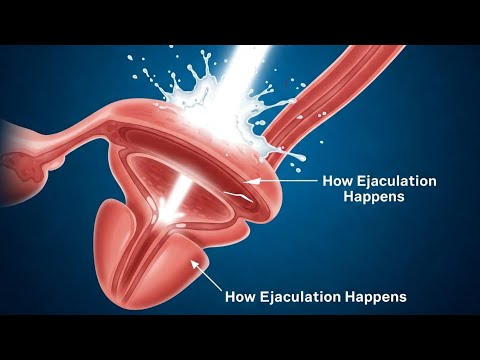
To truly understand female ejaculation, we must first delve into the intricate landscape of female anatomy, a landscape still being fully mapped by science. The primary players in this phenomenon are believed to be the Skene’s glands, also known as the paraurethral glands or the "female prostate."
The Skene’s Glands: The Female Prostate
Located around the urethra, these glands are homologous to the male prostate gland, sharing similar embryonic origins. Like the prostate, Skene’s glands produce a fluid that contains prostate-specific antigen (PSA) and prostatic acid phosphatase (PAP), markers typically associated with male ejaculate. This chemical signature is one of the strongest pieces of evidence differentiating female ejaculate from urine.
The G-Spot Connection
The "G-spot," or Gräfenberg spot, is often described as an erogenous zone inside the vagina, located on the anterior (front) wall, a few centimeters in. While its existence as a distinct anatomical structure has been debated, many women report intense pleasure and the sensation of needing to urinate when this area is stimulated. This area is rich in nerve endings and is intimately connected with the Skene’s glands and the urethral sponge (a cushion of tissue surrounding the urethra).
Stimulation of this area, often through deep penetration or specific finger techniques, can lead to powerful orgasms, and for some, the expulsion of fluid. The G-spot might not be a single "spot" but rather a larger erogenous zone encompassing the Skene’s glands, the clitoral crura (internal parts of the clitoris), and the urethral sponge, all working in concert.
Two Types of Fluid? "Squirt" vs. Female Ejaculation
Here lies a significant point of contention and clarification within the debate: are there one or two types of fluid expelled?
-
Female Ejaculation (Small Volume): This refers to a typically small amount (a few drops to a teaspoon) of milky, thick, often white or translucent fluid. Chemical analysis consistently shows the presence of PSA, PAP, and fructose, akin to male seminal fluid, and not urine. This fluid is believed to originate directly from the Skene’s glands.
-
"Squirting" / Female Expulsion (Large Volume): This phenomenon involves a much larger volume of clear, watery fluid, sometimes described as a gush, expelled during orgasm. For a long time, skeptics vehemently argued this was merely involuntary urination, particularly given its appearance and volume. However, more recent research, employing techniques like MRI and chemical analysis, suggests a more nuanced picture. While some studies have indeed found high levels of urine in the "squirt," others have shown it to be a mixture of bladder fluid and secretions from the Skene’s glands. Some theories propose that intense G-spot stimulation can cause the urethra and bladder to temporarily relax and release some urine, which then mixes with true female ejaculate, or that the Skene’s glands are capable of producing a more dilute fluid under certain conditions of extreme arousal and pressure.
The prevailing scientific consensus is moving towards recognizing both phenomena. Female ejaculation (small volume, gland-derived) is distinct from the larger volume "squirt," which often involves a component of diluted bladder fluid, perhaps expelled due to extreme pelvic floor contractions and pressure on the bladder during intense arousal. The exact mechanisms and proportions of each fluid type continue to be areas of active research.
The Debate Rages On: Skeptics, Science, and Stigma
The "squirt" debate is fueled by a complex interplay of scientific uncertainty, historical bias, and sociocultural factors.
The Skeptics’ Argument: For decades, the primary argument against the existence of female ejaculation was simple: "It’s just urine." This was often supported by the observation that the fluid was clear, watery, and sometimes smelled faintly of urine. Critics argued that women experiencing this were simply having an accidental release of urine due to intense pelvic floor contractions or a lack of bladder control during orgasm. This perspective, while seemingly grounded in basic biology, inadvertently perpetuated shame and embarrassment for women who experienced it, leading many to believe they were "leaking" or incontinent.
The Scientific Counter-Argument: The discovery of PSA and PAP in female ejaculatory fluid, coupled with studies showing no creatinine (a waste product found in urine) or only trace amounts in pure female ejaculate, provided strong evidence against the "just urine" theory for the small-volume fluid. Imaging studies, such as transvaginal ultrasounds and MRI scans conducted during arousal and orgasm, have shown engorgement of the Skene’s glands and the urethral sponge, sometimes preceding the expulsion of fluid. These studies suggest a physiological mechanism beyond simple bladder release.
The larger volume "squirt" remains more controversial, but even here, the narrative is shifting. While it may contain bladder fluid, it’s increasingly understood not as mere incontinence, but as a complex physiological event occurring during peak sexual arousal, possibly involving a coordinated relaxation of the bladder sphincter and contraction of the pelvic floor, alongside glandular secretions. The key difference is that it’s not a failure of the body, but a response to intense pleasure.
The Role of Media and Pornography: The popularization of "squirt" in pornography has been a double-edged sword. On one hand, it has brought awareness to the phenomenon, showing women experiencing intense pleasure and powerful bodily responses. On the other hand, it has often sensationalized and misrepresented it, sometimes creating unrealistic expectations or presenting a narrow, performance-oriented view of female sexuality. The emphasis on large-volume "squirting" can inadvertently overshadow the more common, smaller-volume female ejaculation and put undue pressure on women to "perform" in a specific way.



Post Comment