Beyond the Superfood Hype: The Science of Oxidative Stress
The Prologue: A Quest for Cellular Immortality
In our modern pursuit of health and longevity, the marketplace is awash with promises. From exotic berries to powdered greens, the term "superfood" has become a ubiquitous beacon, guiding consumers towards what they hope are elixirs of vitality. The narrative is often alluringly simple: these foods, rich in antioxidants, will fight the invisible enemy within – free radicals – thereby staving off aging, disease, and decay. It’s a compelling story, one that taps into our deepest desires for control over our biological destiny, a quest for cellular immortality through a spoonful of acai or a sprinkle of spirulina.
Yet, like many captivating tales, the superfood saga, while rooted in a kernel of truth, often suffers from oversimplification. The real story, the one unfolding at the molecular level within each of our trillions of cells, is far more intricate, nuanced, and ultimately, more empowering than any marketing campaign could convey. It’s a story not of magic bullets, but of delicate balances, adaptive responses, and the profound wisdom encoded within our biology. This is the story of oxidative stress, a phenomenon that is neither purely villain nor hero, but a critical player in the grand symphony of life and health.
Chapter 1: The Unseen Battlefield – Understanding Oxidative Stress
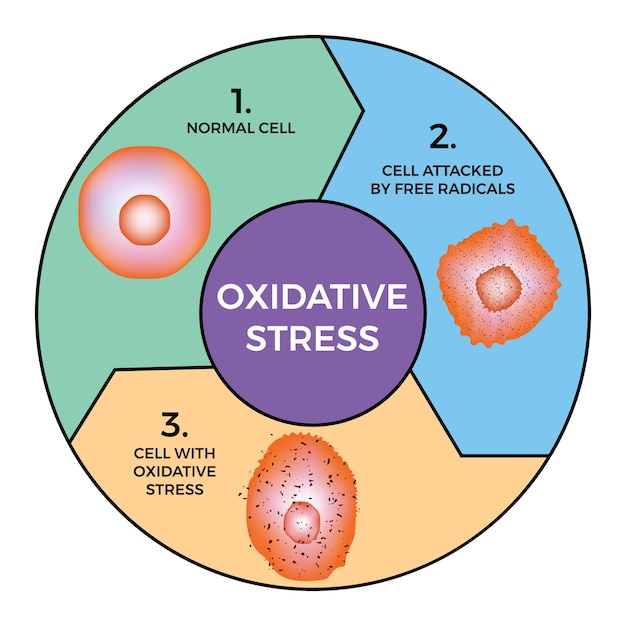
To truly move beyond the hype, we must first descend into the microscopic arena where this cellular drama unfolds. At its core, oxidative stress is an imbalance – a precarious tilt in the scales between the production of reactive oxygen species (ROS) and reactive nitrogen species (RNS), collectively known as free radicals, and the body’s ability to detoxify these reactive intermediates or repair the resulting damage.
Imagine your cells as bustling cities, constantly producing energy through metabolic processes. This energy production, primarily occurring in the mitochondria (the powerhouses of the cell), is akin to a controlled combustion engine. Just as an engine produces exhaust fumes, cellular metabolism, particularly aerobic respiration, inevitably generates byproducts. These byproducts are often free radicals: molecules with one or more unpaired electrons in their outer orbit, rendering them highly unstable and aggressively reactive. They are molecular "lone wolves," desperate to snatch an electron from any nearby stable molecule to achieve stability.
The most common free radicals derived from oxygen include superoxide radicals ($textO_2^cdot-$), hydroxyl radicals ($textOH^cdot$), and hydrogen peroxide ($textH_2textO_2$). While hydrogen peroxide isn’t a free radical itself (it lacks an unpaired electron), it’s a precursor to the highly dangerous hydroxyl radical and a key player in oxidative cascades. Similarly, nitric oxide ($textNO^cdot$) is a crucial RNS, which, while beneficial in certain contexts (like vasodilation), can react to form peroxynitrite ($textONOO^-$), another potent oxidant.
The Damage Report: What Free Radicals Attack
When the production of these reactive species overwhelms the cellular defense systems, they become indiscriminate marauders, causing damage to vital cellular components:
- DNA Damage: Free radicals can attack the intricate double helix of DNA, leading to base modifications, strand breaks, and cross-links. This damage, if not properly repaired, can result in mutations, contributing to carcinogenesis and accelerating cellular aging. Imagine a tiny saboteur scrambling the blueprints of your city.
- Protein Oxidation: Proteins are the workhorses of the cell – enzymes, structural components, transporters. Free radicals can modify their amino acid residues, leading to changes in their structure, function, and stability. Oxidized proteins can lose their enzymatic activity, aggregate into insoluble clumps (as seen in neurodegenerative diseases like Alzheimer’s and Parkinson’s), or become targets for degradation.
- Lipid Peroxidation: Cell membranes are primarily composed of polyunsaturated fatty acids. These lipids are particularly vulnerable to free radical attack, leading to a chain reaction called lipid peroxidation. This process damages the structural integrity and fluidity of cell membranes, impairing cellular signaling, nutrient transport, and waste removal. It’s like the city walls becoming porous and unstable.
This constant, low-level assault is a natural consequence of life in an oxygen-rich environment. Our bodies are not passive victims; they have evolved sophisticated defense mechanisms to manage this inherent challenge.
Chapter 2: The Body’s Internal Arsenal – Endogenous Antioxidant Systems
Before we turn to external dietary interventions, it’s crucial to appreciate the magnificent internal machinery our bodies possess to combat oxidative stress. These endogenous antioxidant systems are the first, and often most effective, line of defense. They are a testament to millions of years of evolutionary fine-tuning, far more integrated and responsive than any isolated compound ingested from a supplement.
These defenses can be broadly categorized into two groups:
-
Enzymatic Antioxidants: These are highly specialized protein catalysts that directly neutralize free radicals or their precursors. They require specific mineral cofactors to function optimally:
- Superoxide Dismutase (SOD): This enzyme acts as a rapid response team, converting the superoxide radical ($textO_2^cdot-$), one of the most common ROS, into less harmful oxygen ($textO_2$) and hydrogen peroxide ($textH_2textO_2$). There are different forms of SOD, located in various cellular compartments (e.g., mitochondrial SOD2 uses manganese, cytoplasmic SOD1 uses copper and zinc, extracellular SOD3 uses copper and zinc).
- Catalase: Picking up where SOD leaves off, catalase efficiently converts hydrogen peroxide into water and oxygen. It’s particularly abundant in peroxisomes, organelles involved in lipid metabolism.
- Glutathione Peroxidase (GPx): This family of enzymes, which relies on selenium as a cofactor, reduces hydrogen peroxide and lipid hydroperoxides to water and corresponding alcohols, protecting cell membranes from lipid peroxidation.
- Glutathione Reductase (GR): This enzyme is crucial for regenerating glutathione, keeping the cellular glutathione pool in its reduced, active form.


Post Comment