Protect Your Peak: Preventive Exercises for Long-Term Sexual Wellness
Sexual wellness, often relegated to hushed whispers or treated as a reactive response to decline, is in truth a vibrant, integral component of overall human health and vitality. It is a nuanced tapestry woven from physical, emotional, psychological, and relational threads. Yet, in our youth-obsessed culture, the conversation often centers on immediate performance or the fleeting pursuit of an idealized peak, rather than the sustained, lifelong cultivation of this precious aspect of ourselves.
This article invites you on a different journey: one focused on preventive exercises for long-term sexual wellness. It’s about building a robust, resilient foundation, not just for today, but for decades to come. It’s about understanding that your sexual health, much like your cardiovascular fitness or mental acuity, is not a static state but a dynamic ecosystem that thrives on mindful attention and proactive care. We’re not just aiming to reach a peak; we’re aiming to Protect Your Peak, ensuring that the summit of your sexual experience remains accessible, enjoyable, and deeply fulfilling throughout your life’s rich unfolding.
This isn’t merely a prescription of isolated movements; it’s an exploration of how the body, mind, and spirit converge to create a symphony of sexual well-being. For the knowledgeable audience, we will delve beyond the superficial, connecting the dots between physiological mechanisms, psychological states, and the profound impact of consistent, intelligent exercise.
The Silent Erosion: Why Prevention Matters Now
Before we embark on the solutions, let’s acknowledge the silent erosion that often accompanies the passage of time. Many individuals, irrespective of gender, encounter challenges to their sexual health as they age. For men, this can manifest as erectile dysfunction (ED), decreased libido, or ejaculatory issues. For women, it might involve decreased lubrication, pain during intercourse (dyspareunia), reduced sensation, or challenges with orgasm. Beyond these specific dysfunctions, there’s often a general dimming of the sexual spark, a quiet resignation that this aspect of life is destined to fade.
Societal narratives often frame these changes as inevitable, an unchangeable consequence of aging. This narrative is not only disempowering but, crucially, incomplete. While some age-related physiological shifts are natural, their impact on sexual function can be significantly mitigated, and in many cases, outright prevented, through strategic lifestyle interventions – with exercise leading the charge.
The cost of inaction isn’t just a diminished sex life; it’s a loss of intimacy, connection, self-esteem, and overall quality of life. Sexual wellness is intrinsically linked to mental health, relationship satisfaction, and even physical longevity. Ignoring it is akin to neglecting the foundational pillars of a magnificent structure.
The Body as a Sanctuary: Reclaiming Agency Through Movement
Your body is an extraordinary vessel, capable of incredible resilience and adaptation. It is also the primary instrument through which sexual experience is perceived and expressed. To protect your peak, we must treat this vessel as a sanctuary, understanding its intricate mechanisms and providing it with the nourishment of movement.
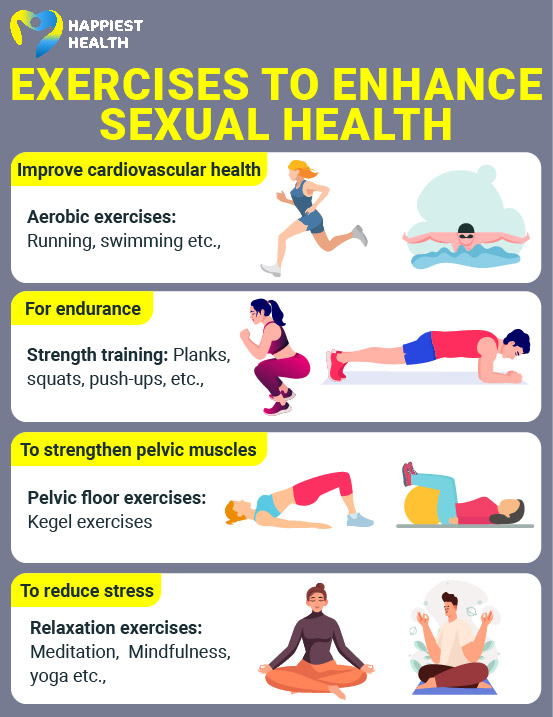
Our approach will be holistic, encompassing various forms of exercise that, when integrated, create a powerful protective shield for your sexual health. We will explore:
- The Pelvic Floor: The Unsung Hero
- Cardiovascular Fitness: The Engine of Desire
- Strength Training: Hormones, Power, and Confidence
- Flexibility and Mobility: Unlocking Sensual Flow
- Core Strength: Stability, Connection, and Breath
- Mind-Body Connection: The Neurological Orchestra
1. The Pelvic Floor: The Unsung Hero
Often overlooked until issues arise (like incontinence or prolapse), the pelvic floor is arguably the most critical muscular group for sexual wellness. This hammock-shaped network of muscles, ligaments, and connective tissues extends from the pubic bone to the tailbone, supporting internal organs, controlling continence, and playing a direct, crucial role in sexual sensation, arousal, and orgasm for all genders.
For Men: A strong, responsive pelvic floor is vital for maintaining erectile rigidity by compressing the veins that drain blood from the penis (ischio-cavernosus and bulbo-spongiosus muscles). It also contributes to ejaculatory control and the intensity of orgasms. Weakness can lead to ED, premature ejaculation, and urinary leakage.
For Women: The pelvic floor muscles wrap around the vagina, urethra, and rectum. Their strength and tone contribute to vaginal sensation, lubrication, and the rhythmic contractions of orgasm. Weakness can lead to reduced sensation, stress incontinence, and pelvic organ prolapse. Conversely, excessive tension can cause dyspareunia (painful intercourse).
Beyond Kegels: The Nuance of Pelvic Floor Training
While "Kegels" (contracting the pelvic floor as if stopping urination) are widely known, effective pelvic floor training is far more nuanced.
- Awareness and Isolation: Many people struggle to correctly identify and engage their pelvic floor muscles. Start by gently attempting to lift and squeeze the muscles around your anus and urethra without engaging your glutes, thighs, or abdominals. Use a mirror or place a clean finger on your perineum to feel the lift.
- The "Elevator" Exercise: Imagine your pelvic floor as an elevator. Slowly lift it to the 1st floor (slight contraction), then 2nd, 3rd (maximum squeeze), holding at the top. Then, slowly lower it, consciously relaxing past the "ground floor" into a state of full release. This trains both contraction and, crucially, relaxation.
- Slow Holds: Contract the pelvic floor to about 70-80% of your maximum effort and hold for 5-10 seconds, breathing normally. Release completely for an equal duration. Repeat 10-15 times.
- Quick Flicks: Rapidly contract and relax the pelvic floor. This builds responsiveness and endurance, important for orgasmic contractions. Perform 10-20 quick contractions.

Post Comment